Ice camping, kayaking, snowshoeing: The epic adventure of an HX Expeditions trip to Antarctica

Editor's Note
The lack of human-made sound is striking.
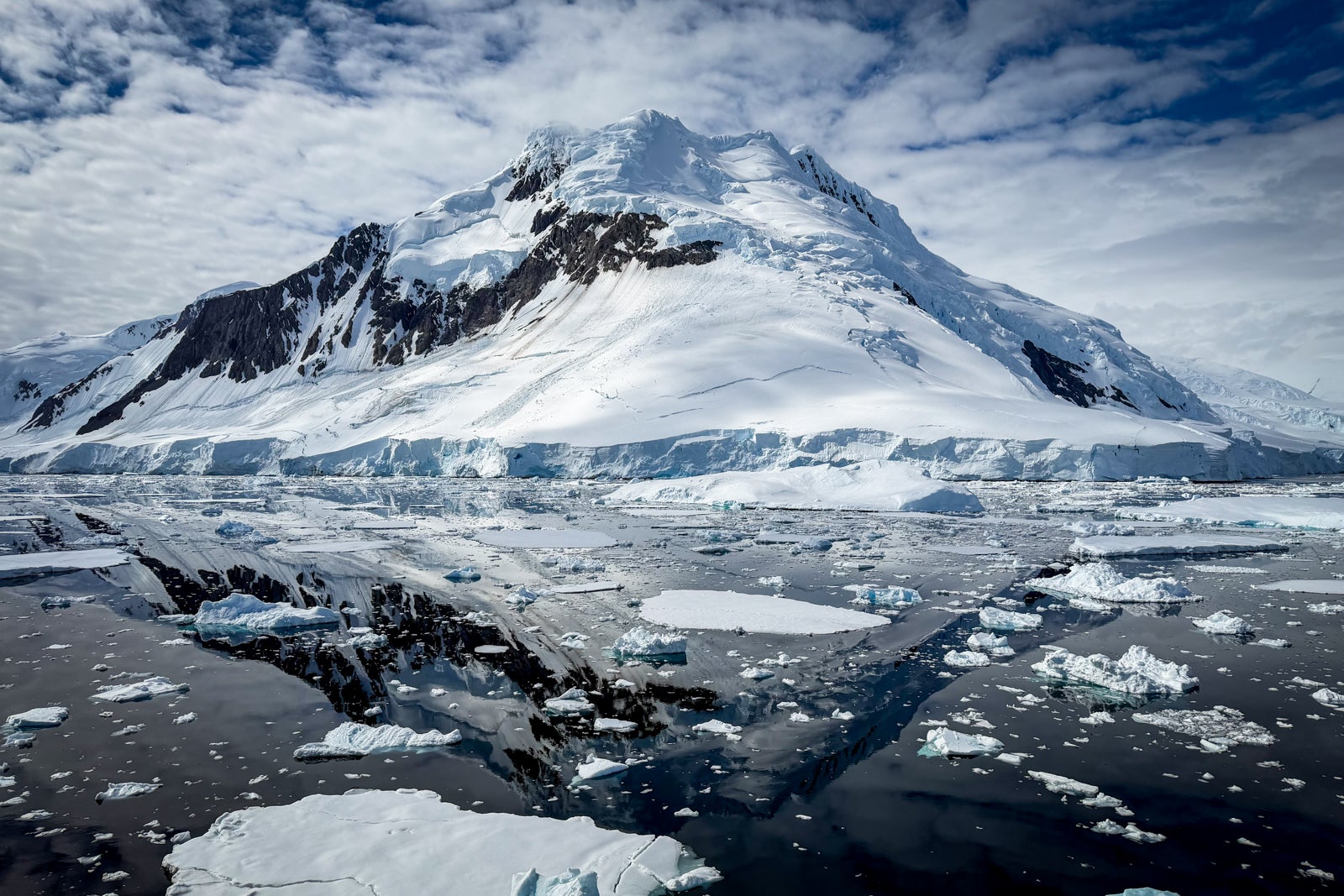
From my tent atop a snowfield along the coast of Antarctica, I'm looking out over the sort of epic landscape most people know from places like Norway or Alaska: soaring snow-covered mountains, creaking glaciers and a bay so still you can see your reflection.
But unlike in those places, there isn't even a hint of humankind in the sounds drifting my way, aside from the occasional rustle of fellow campers in nearby tents.
No muffled rumbles of airplanes flying in the distance. No low-frequency hum of far-off industry. No almost imperceptible buzz of electric current.
All I hear is the faint sound of water lapping against the rocky shoreline. Occasionally, a seabird cries. Somewhere behind me, I can just make out the tiniest drops of melting ice.
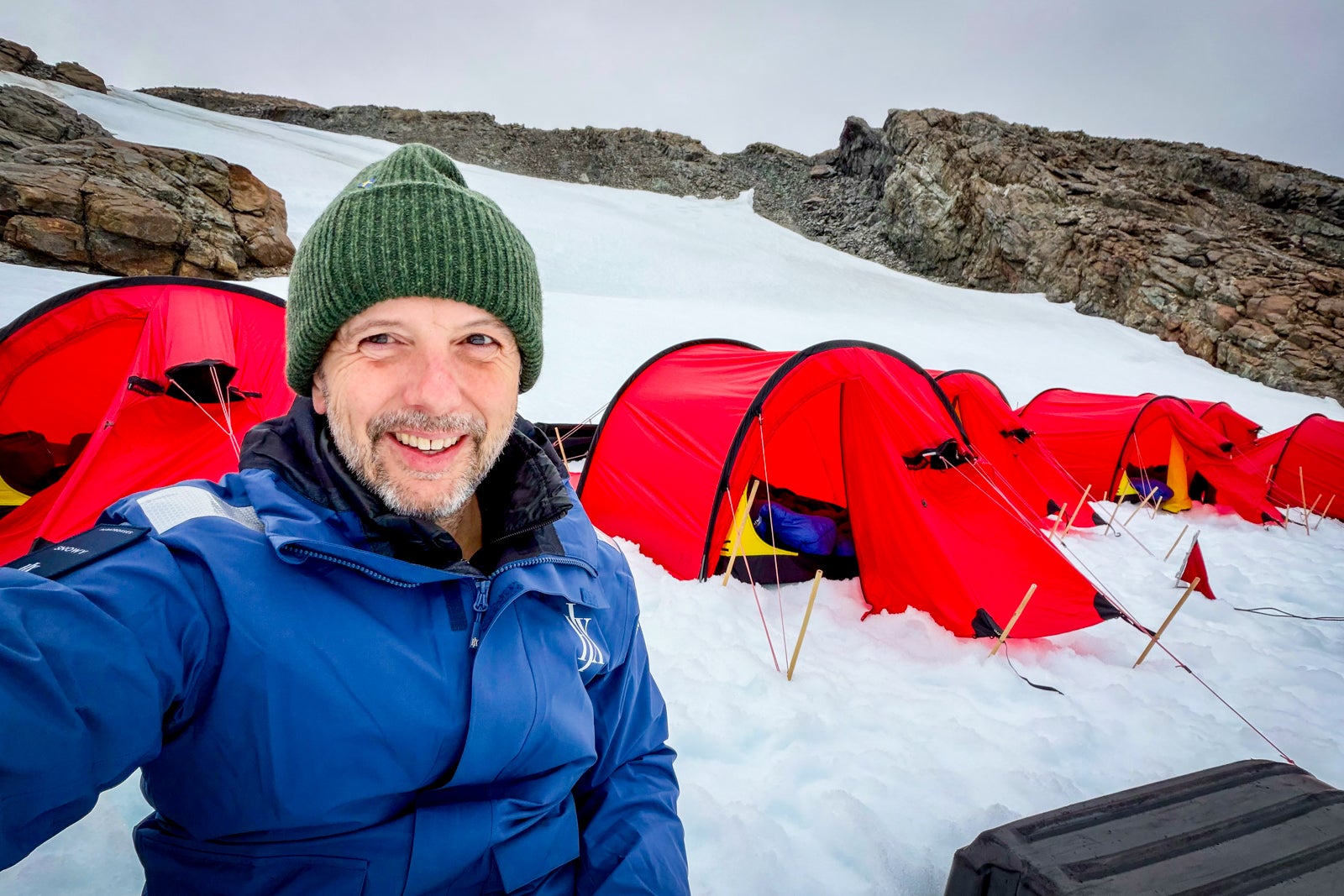
Along with several dozen other travelers aboard the expedition ship Roald Amundsen, I'm getting a rare chance to camp overnight in Antarctica, a place many describe as the world's last great wilderness — and one that is still mostly untouched by humans.
It's an amazing experience — even if it's exhausting and cold at times.
It's also just one of many adventures I'll have before this 16-night expedition voyage to Antarctica comes to an end.
Related: How to get to Antarctica: The pros and cons of flying vs. cruising

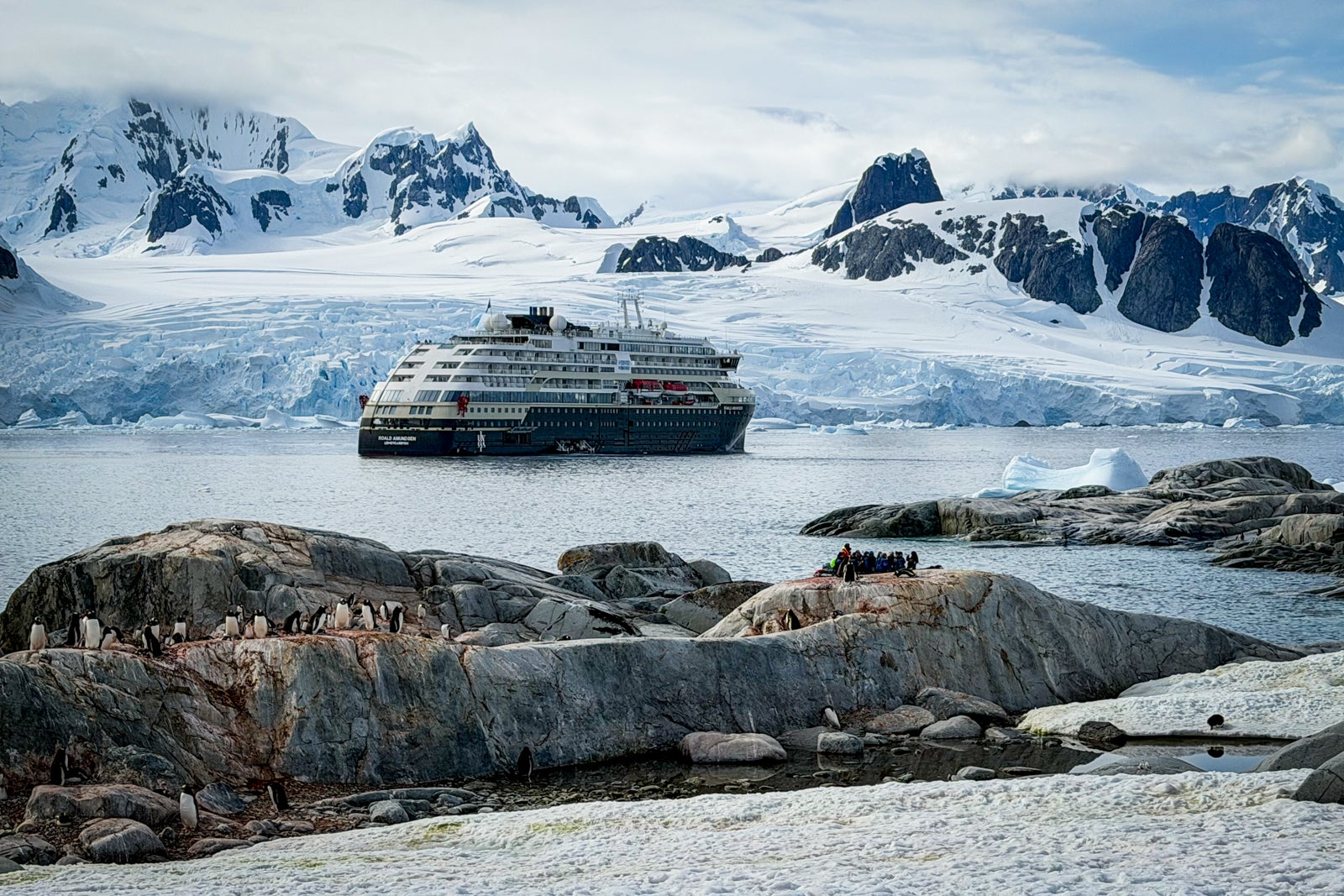
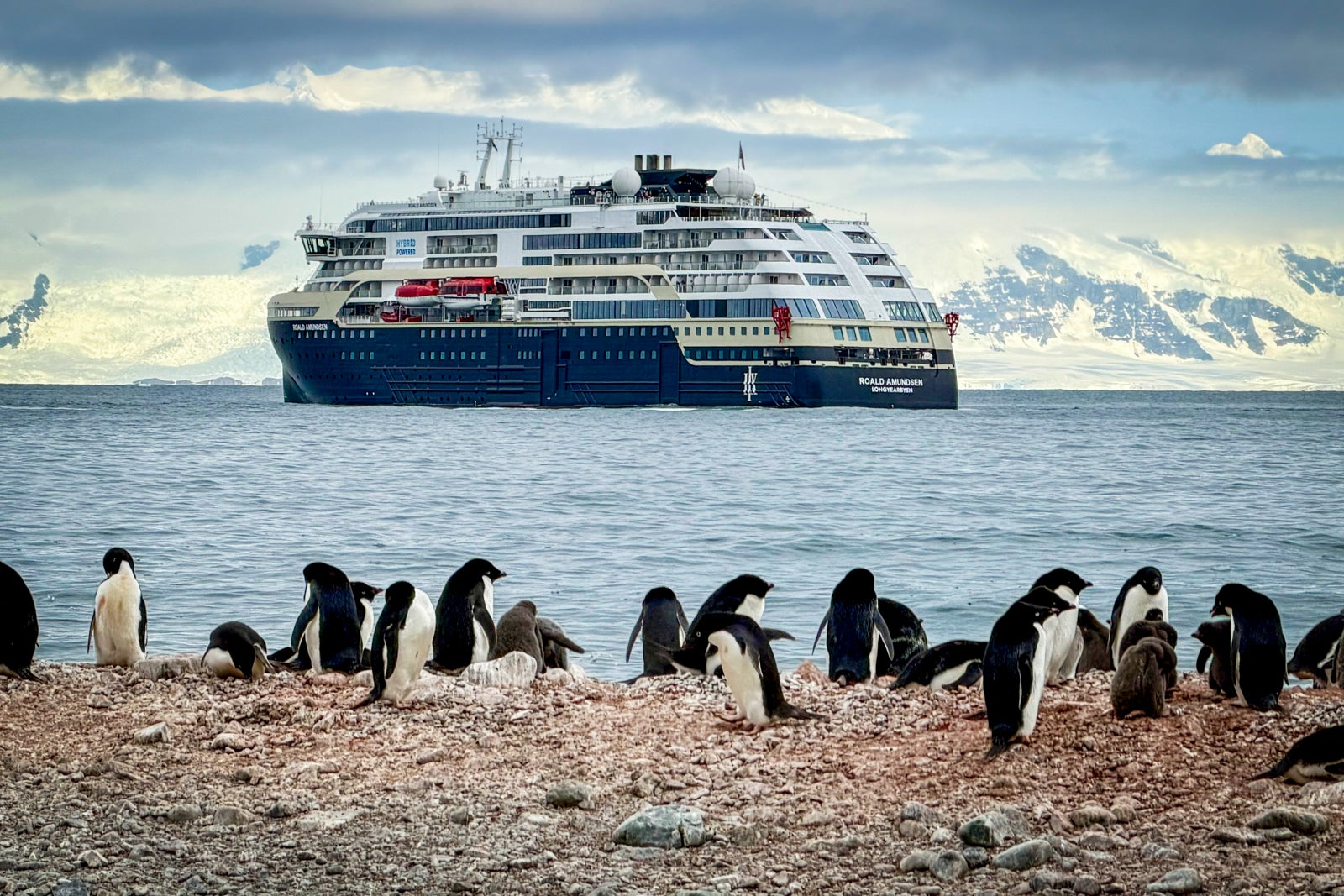
Operated by U.K.-based HX Expeditions, the 265-cabin Roald Amundsen is one of the newest and biggest cruise vessels specifically built for icy adventures in polar regions as well as being the world's first hybrid-powered cruise ship. It serves as a state-of-the-art floating base for everything from ice camping and snowshoeing to sea kayaking and small-boat safaris in some of the planet's coldest climates.
Over the course of this journey, one of the longest offered by HX Expeditions in Antarctica, I find myself marveling time and again at the many ways it allows me to see and experience what has long been one of the most difficult places to reach in the world.
The journey south
Like most cruises to Antarctica, our voyage begins with a crossing of the notoriously rough Drake Passage between South America and the Antarctic continent — an adventure in its own right.
Departing from Ushuaia, Argentina, often described as the southernmost city in the world, Roald Amundsen spends two days pitching and rolling its way southward through 8-to-12-foot waves — far from the worst the Drake has been known to throw at passing vessels but still nothing to dismiss out of hand.
It's enough to leave some passengers, myself included, feeling queasy, even as we revel in the adventure travel rite of passage that is surviving the same epic seas as the great Antarctic explorers of a century ago, including the ship's namesake, Roald Amundsen, the first human to reach the South Pole.
Queasy or not, we are excited about the payoff for our endurance: a chance to spend several days in one of the most beautiful and unusual places on the planet.
That payoff begins three days into the trip when, waking to stillness, we fling open the drapes of our cabins to find ourselves in a stunning bay ringed with snowy mountains, glaciers and a rocky beach lined with penguins.
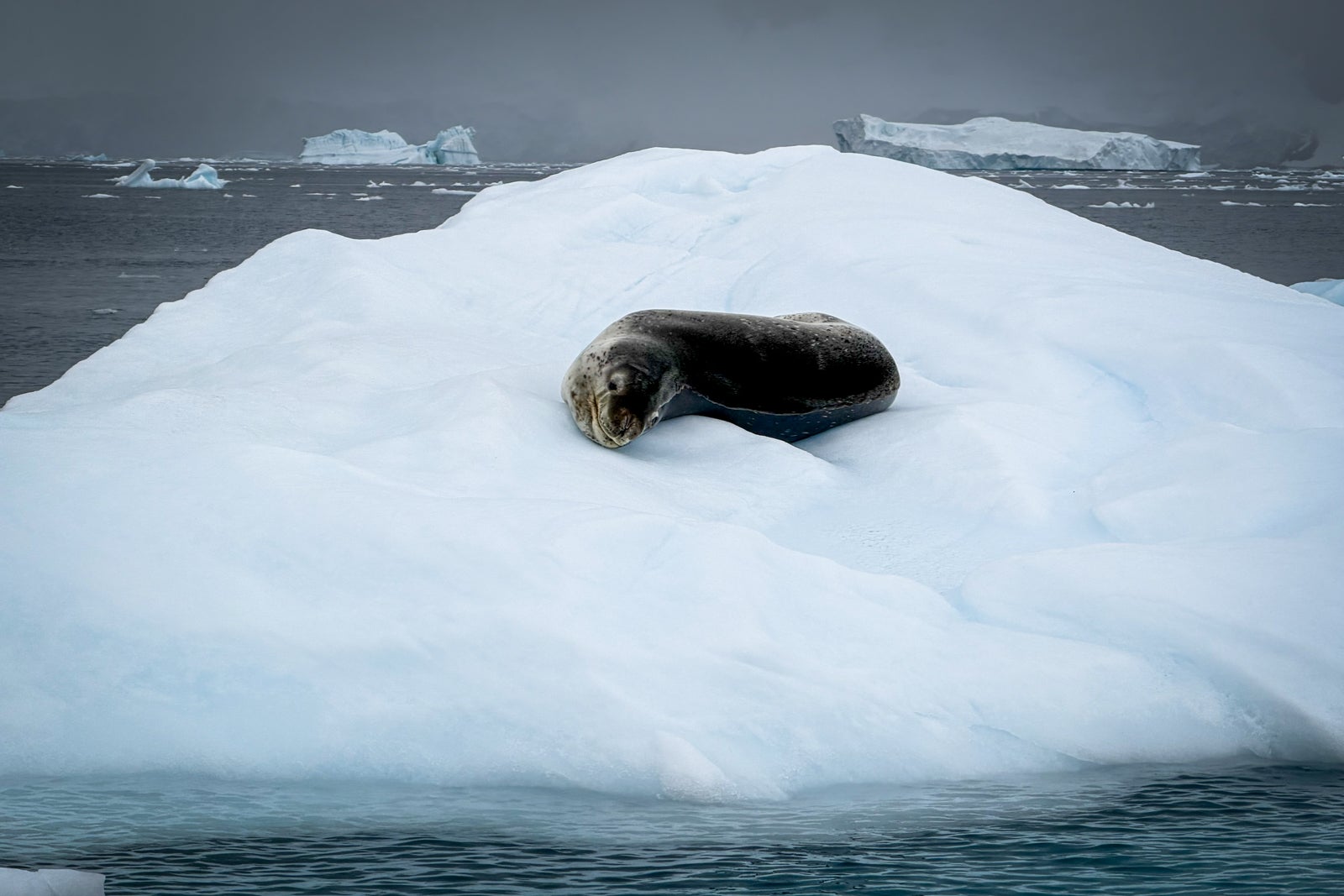
We have arrived at Petermann Island, one of Antarctica's most famous sites and — at least on this day — everything you imagine the continent to be. In just a few hours, in addition to the lovely vistas, we revel in up-close sightings of humpback whales just off the ship's bow, crabeater seals lounging on floating ice chunks and, after landing on the island by way of rubber Zodiac boats, hundreds of Adelie and gentoo penguins.
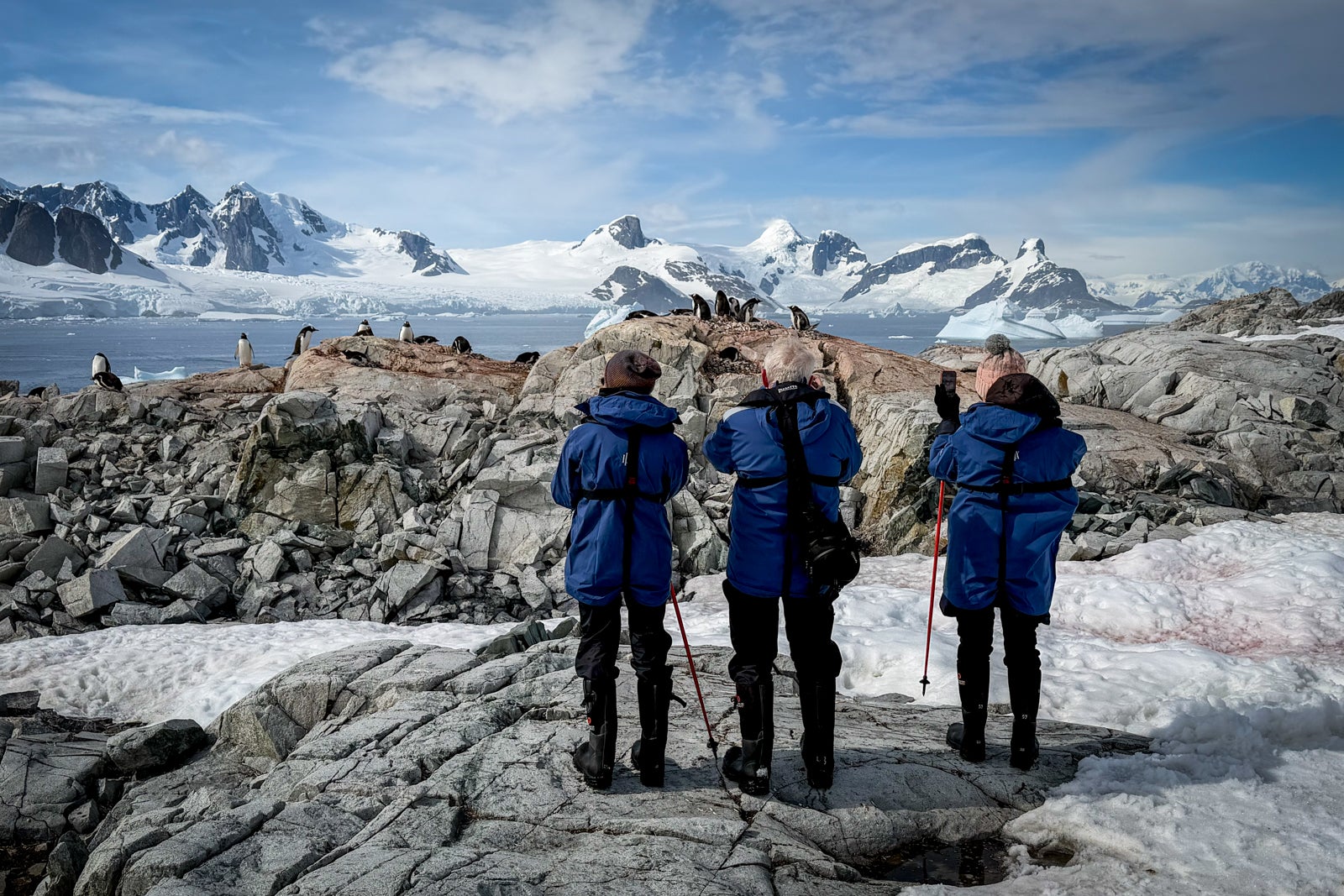
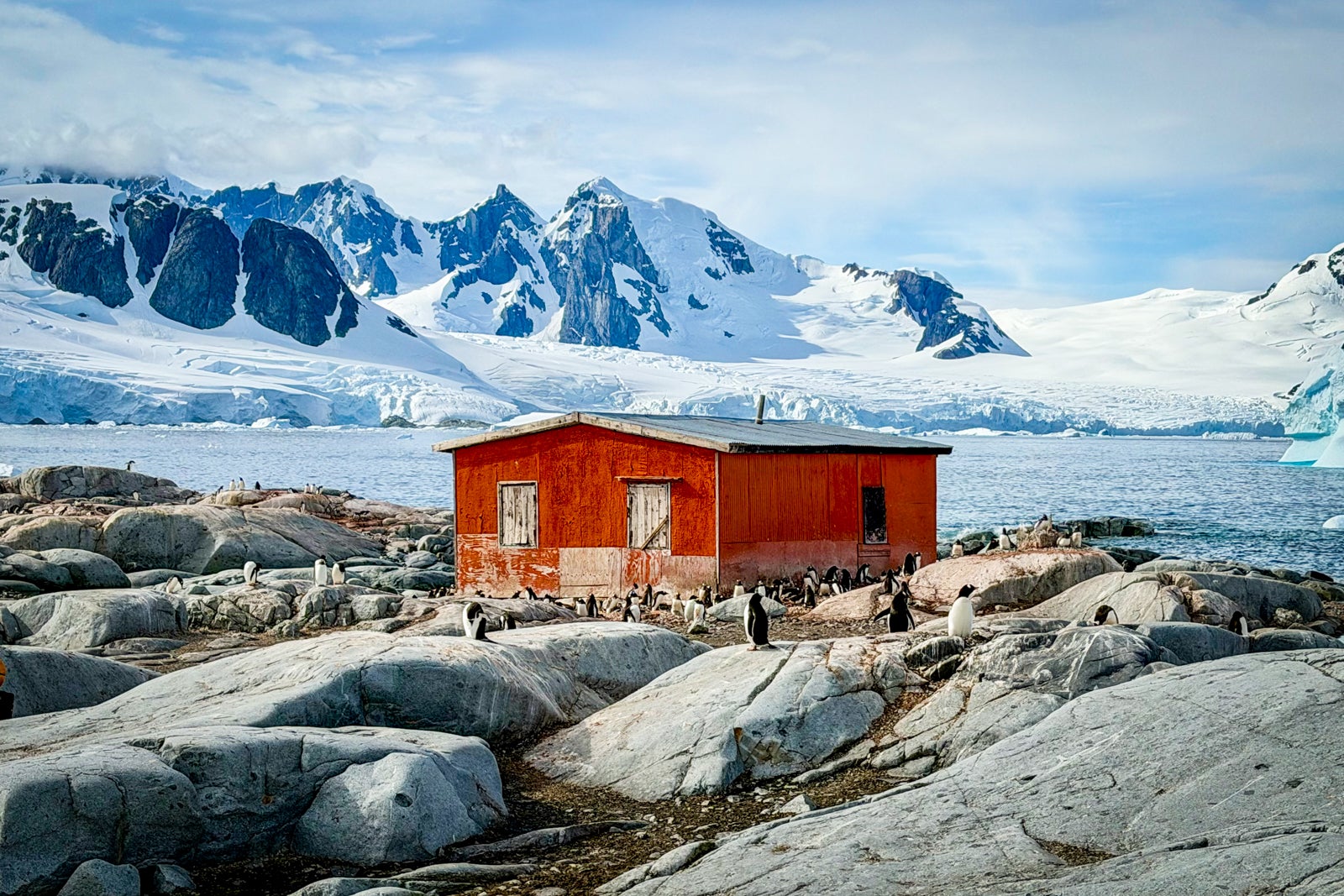
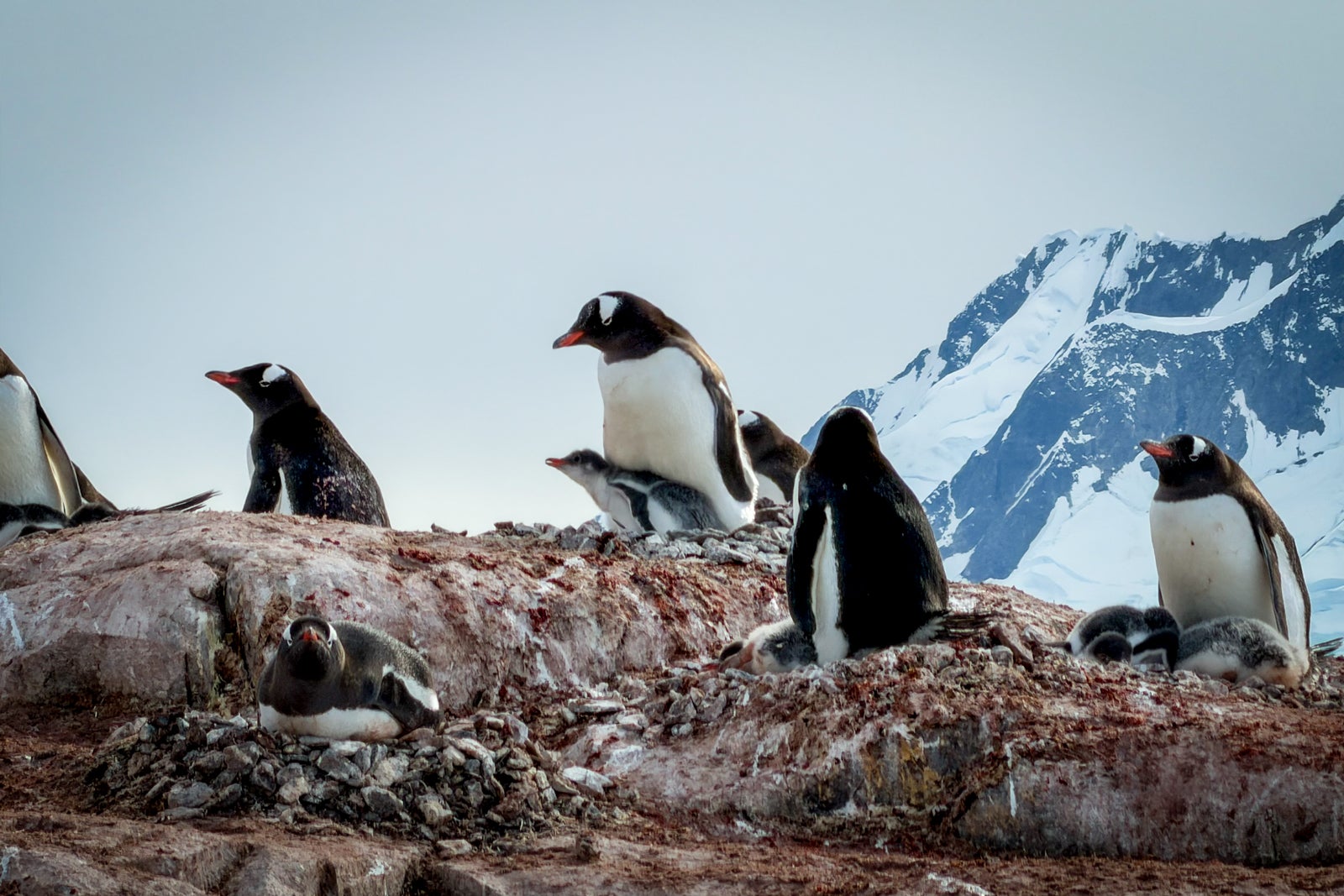
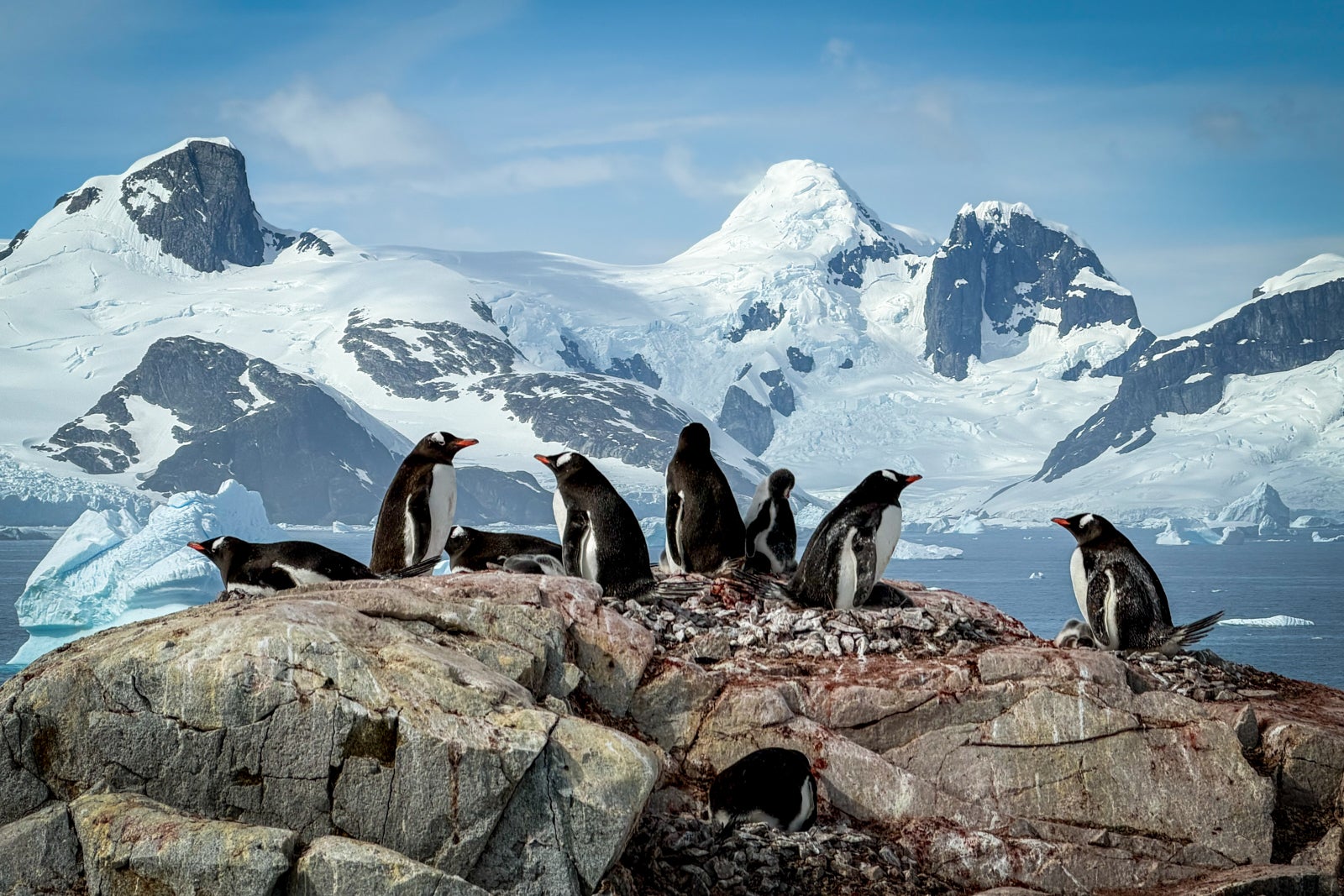
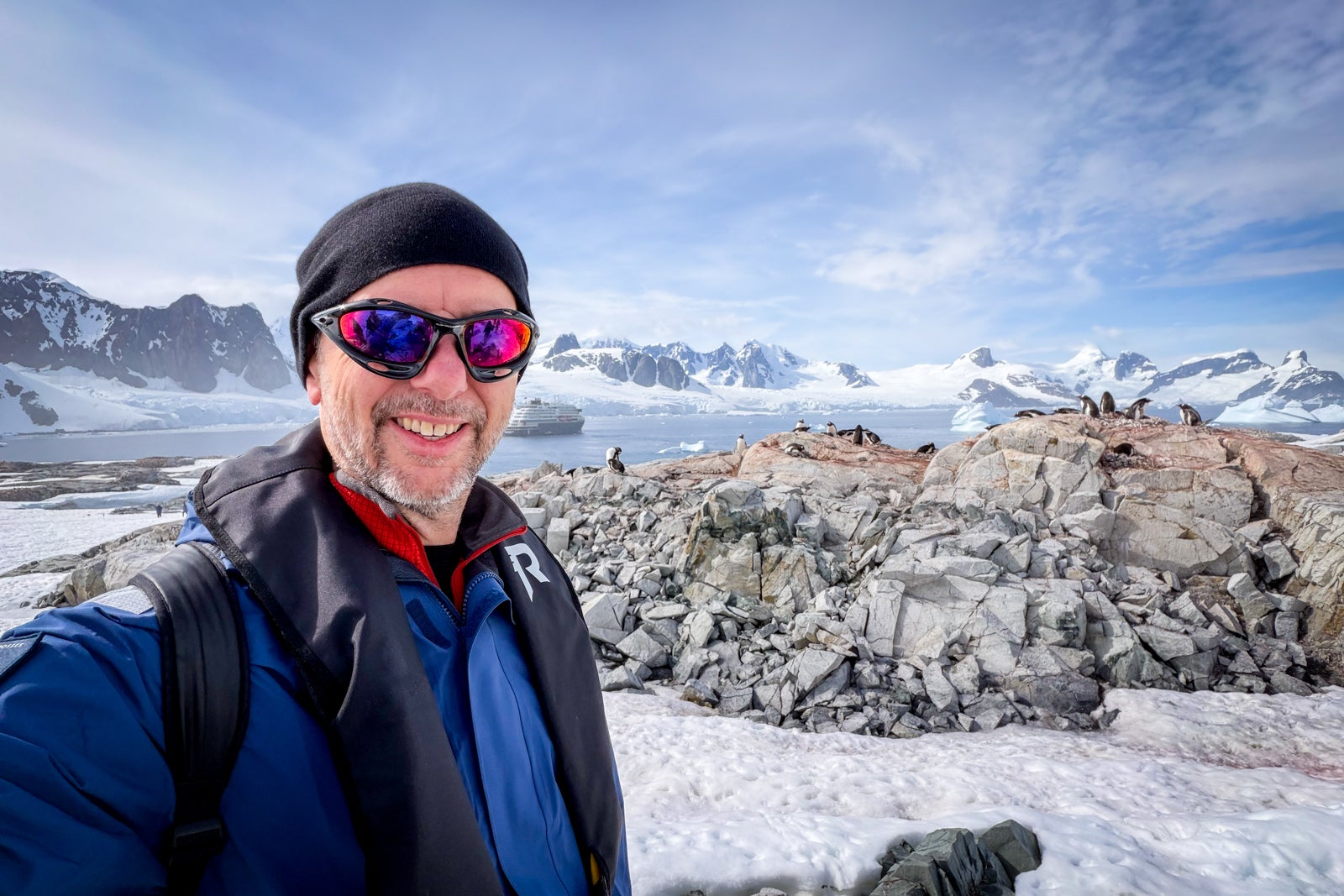
We even spot a giant elephant seal — a true sight to behold. The biggest seals in the world, they grow up to 20 feet long and weigh nearly 9,000 pounds.
It is just the start of several busy days of exploration as we push even farther south along the curving finger of mountainous, glacier-covered land known as the Antarctic Peninsula, venturing into ever more remote and less-visited areas.
On this particular itinerary, dubbed the Antarctica Circle Expedition, crossing south of the Antarctic Circle — something that not every Antarctica-bound vessel does — and reaching nearly 70 degrees south are part of the adventure, too.
A floating platform for adventure
To sail Roald Amundsen in Antarctica is to be caught in a seemingly endless loop of days filled with over-the-top scenery and wildlife sightings.
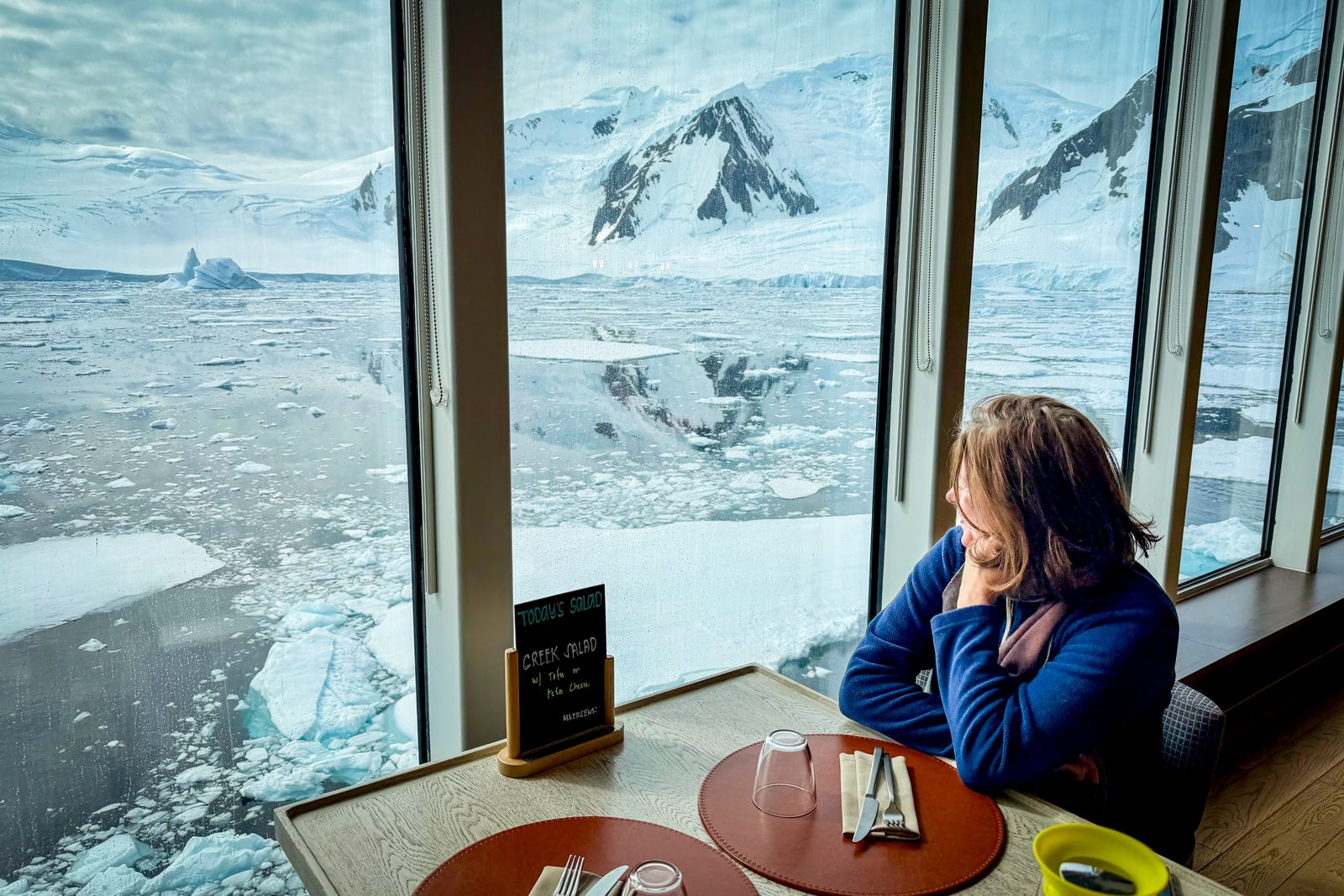
Almost every morning, you wake up to another unbelievable view of the most beautiful, snow-enveloped mountains you've ever seen; monstrously huge glaciers sloping down to the sea; bays full of icebergs; and, as often as not, sightings of penguins and seals on the ice or in the water.
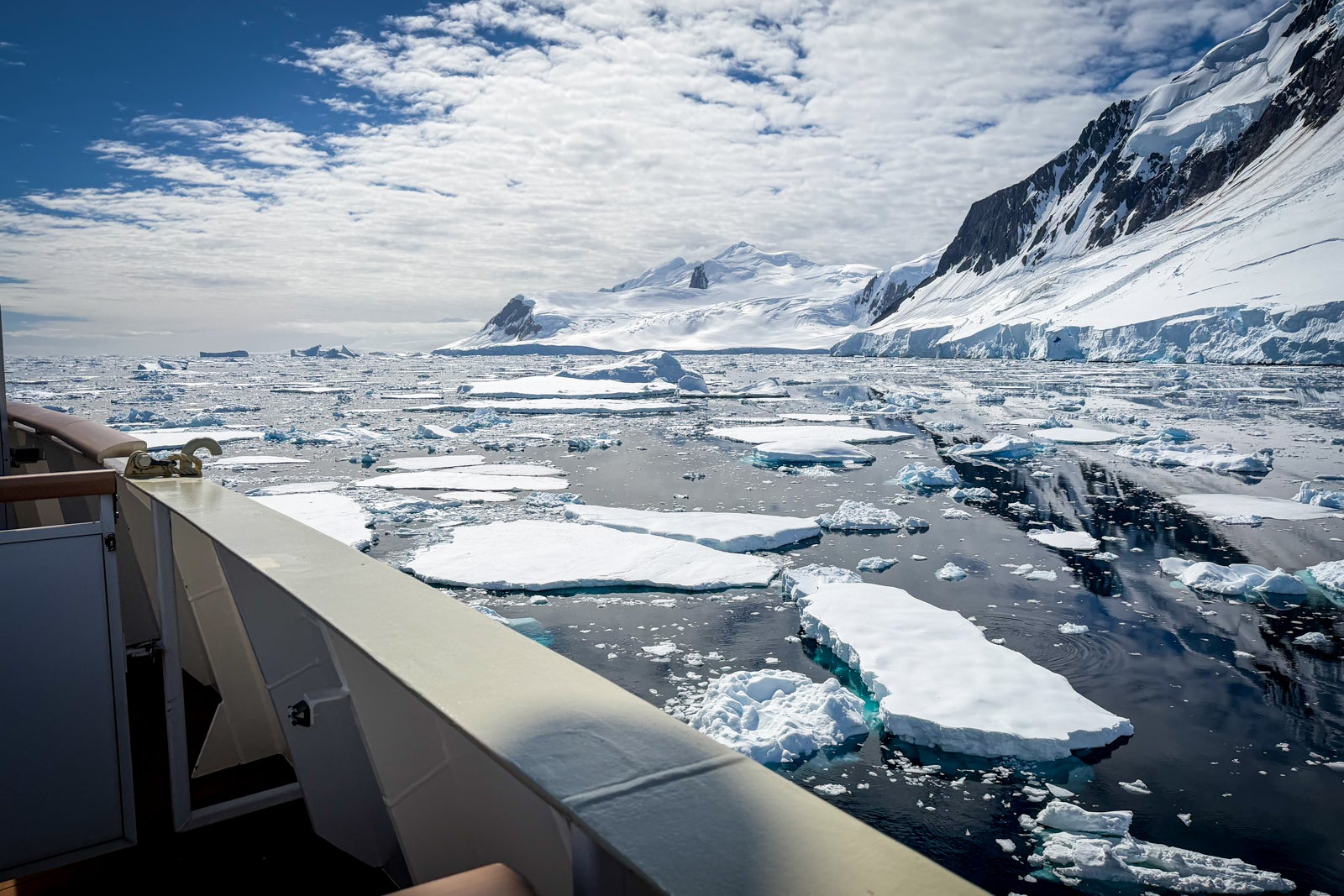
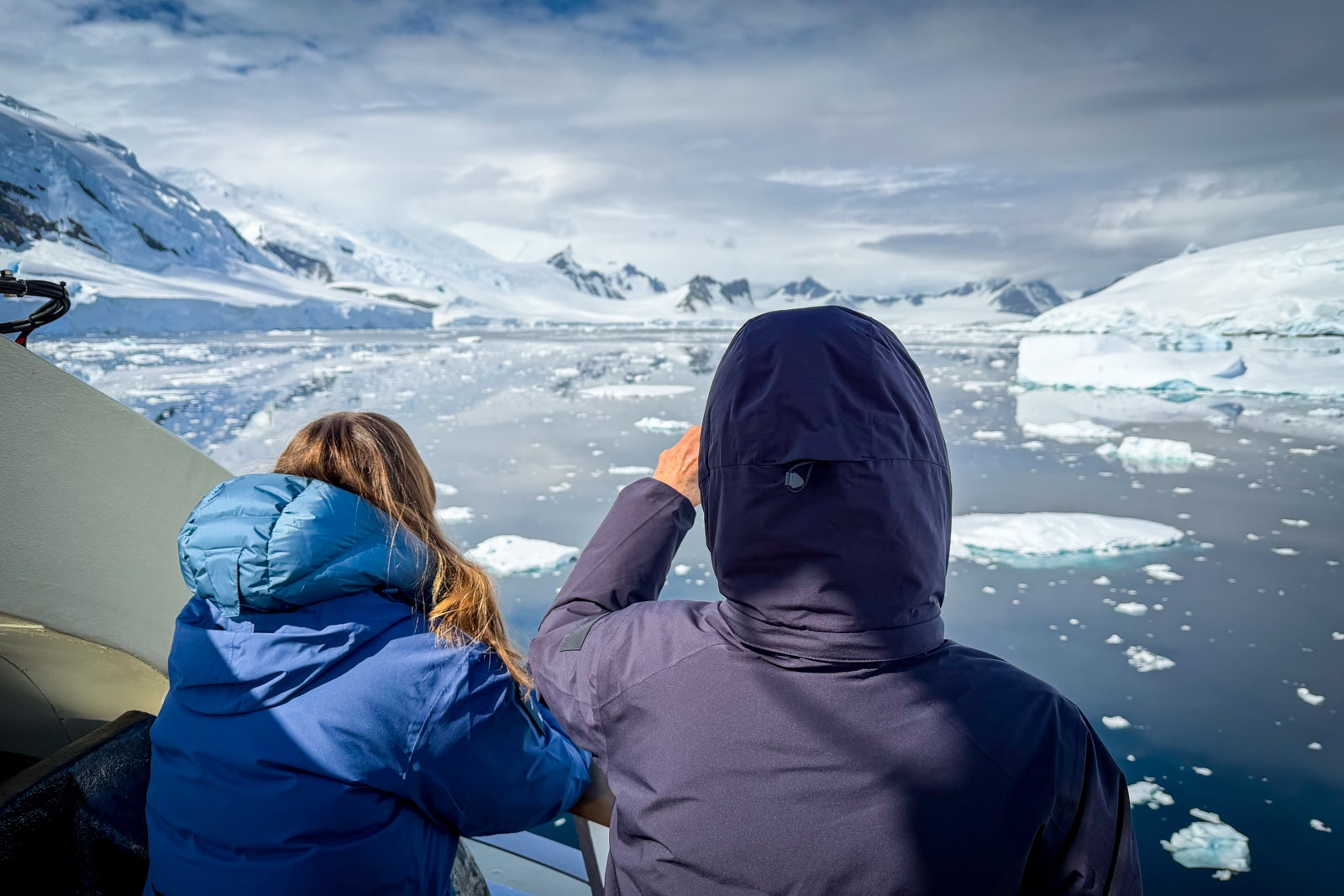
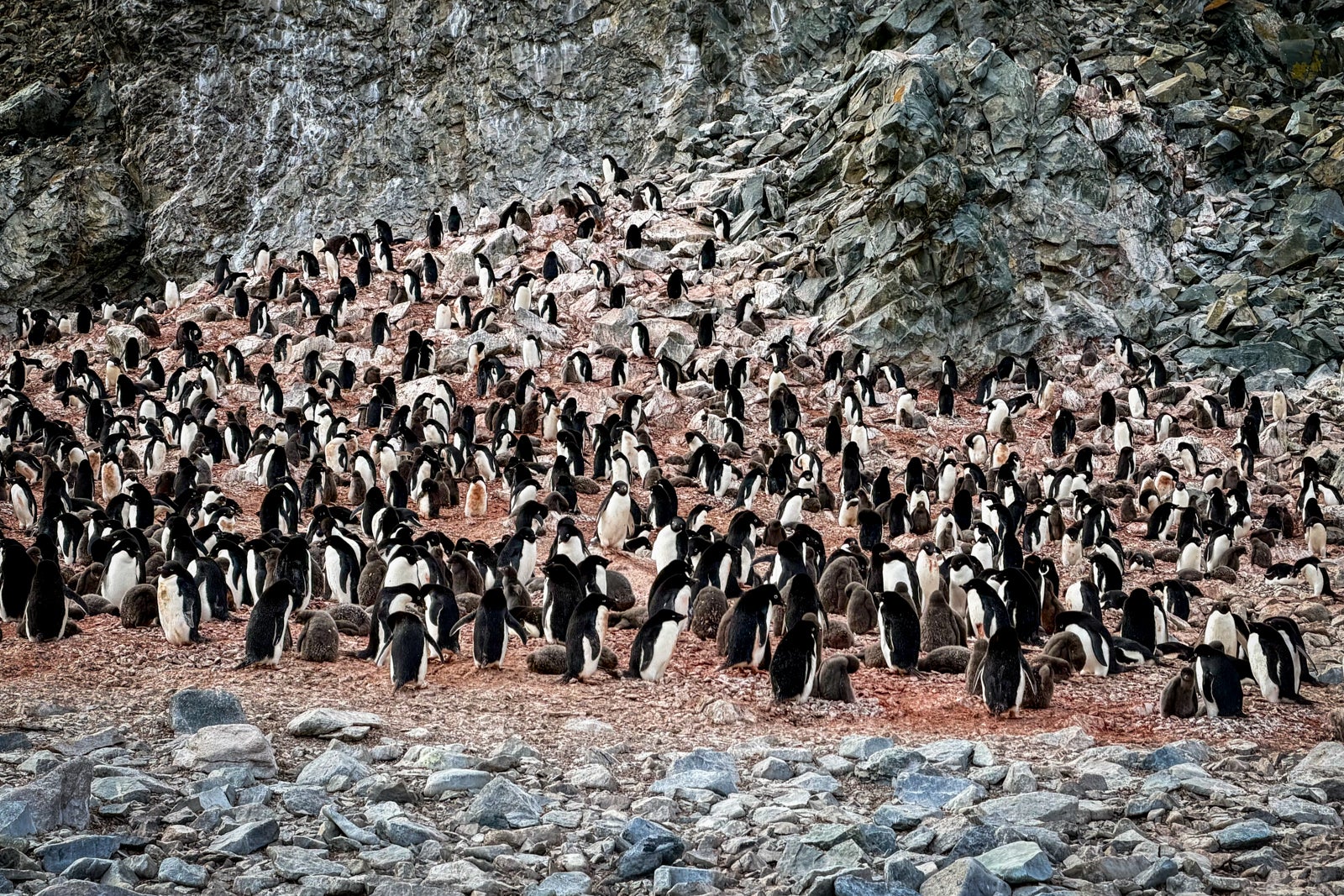
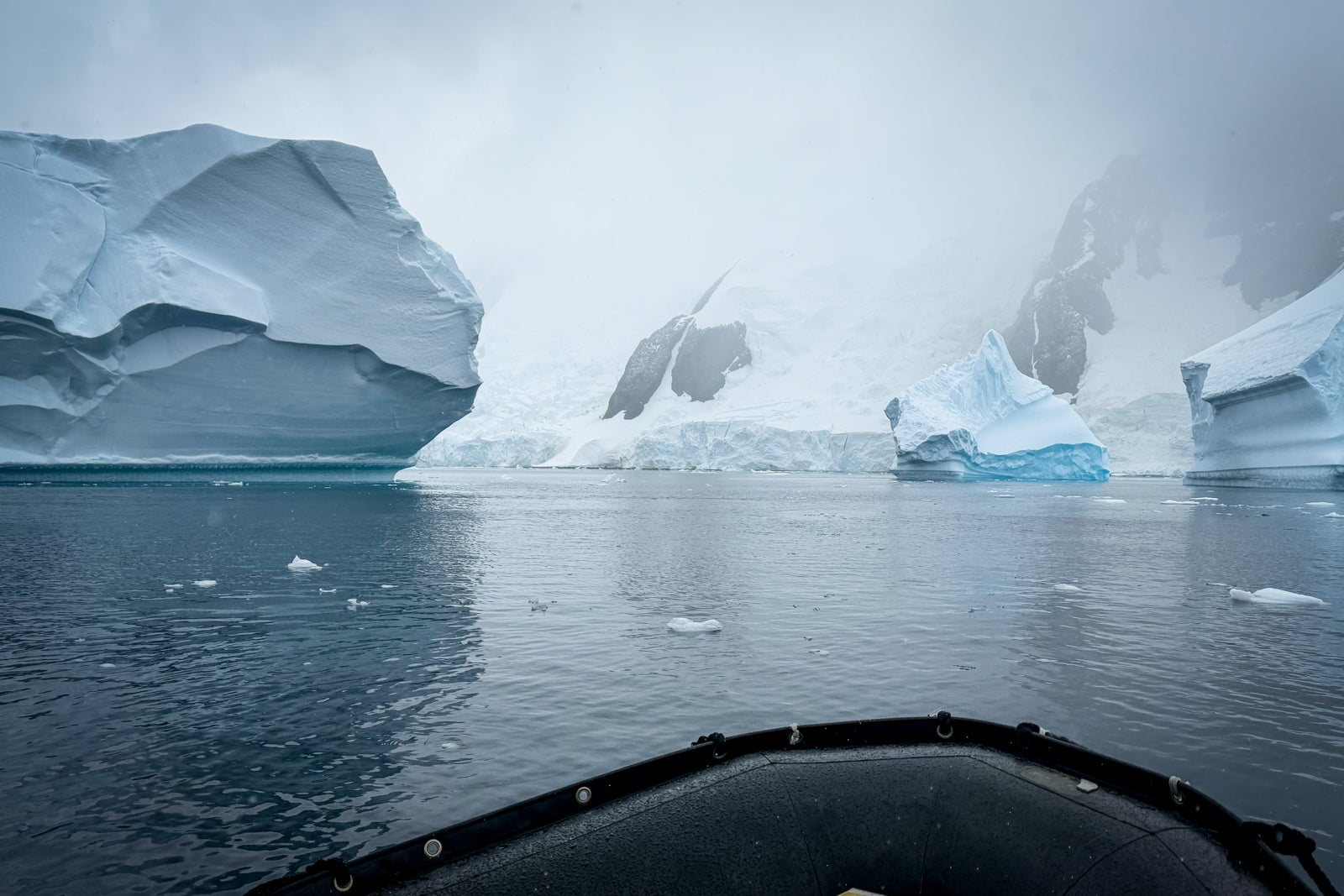
And yet every day brings something a little different. On some days, as on the day we stopped at Petermann Island, we board Zodiac boats for landings to see penguins and seals. On other days, we board these same boats to zip around floating ice in search of seals and whales — "boat-based wildlife safaris," HX Expeditions calls such outings.
Sometimes we do both types of activities, or two of the same kind.
On many days, Roald Amundsen's expedition team also deploys its large fleet of kayaks for exploring. Once or twice on each sailing, weather allowing, the ship offers overnight camping outings. Typically once per trip, also weather allowing, it offers a snowshoeing excursion.
Related: These 8 books are must-reads before an Antarctica trip
Unveiled in 2019, Roald Amundsen is what is known as an expedition cruise ship — a relatively small, hardy vessel specifically built to explore remote, hard-to-reach places such as Antarctica — and among such ships, it is particularly well designed for adventure.
Among notable features, Roald Amundsen boasts a super-efficient Zodiac loading platform that allows for two Zodiacs to be loaded at once for landings, doubling the speed at which passengers can be sent off on landings as compared with most expedition ships. It also has a large "garage" for Zodiacs and kayaks that is just above the waterline. The latter feature allows for much faster Zodiac deployment upon arrival at a landing spot than on many other vessels.
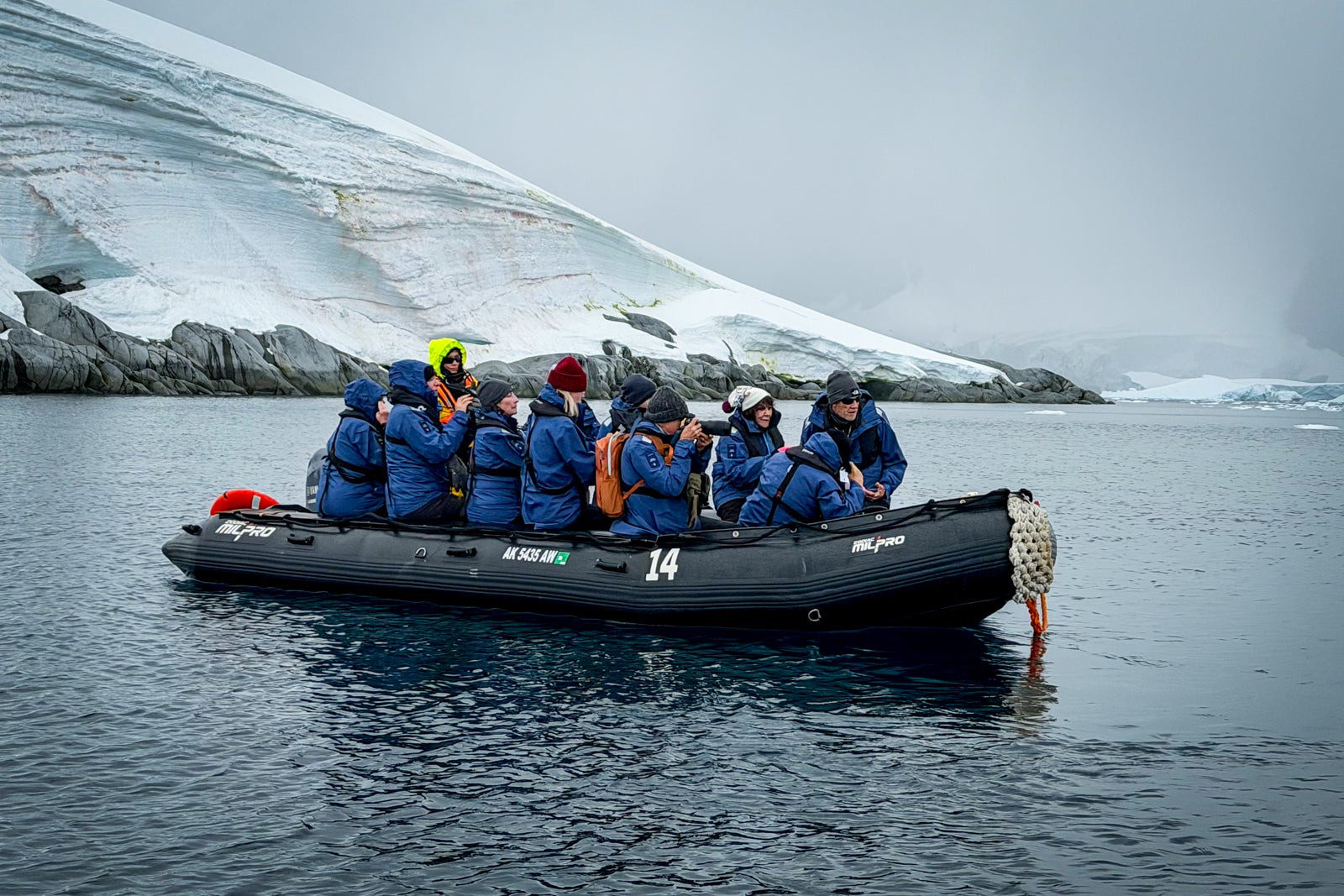
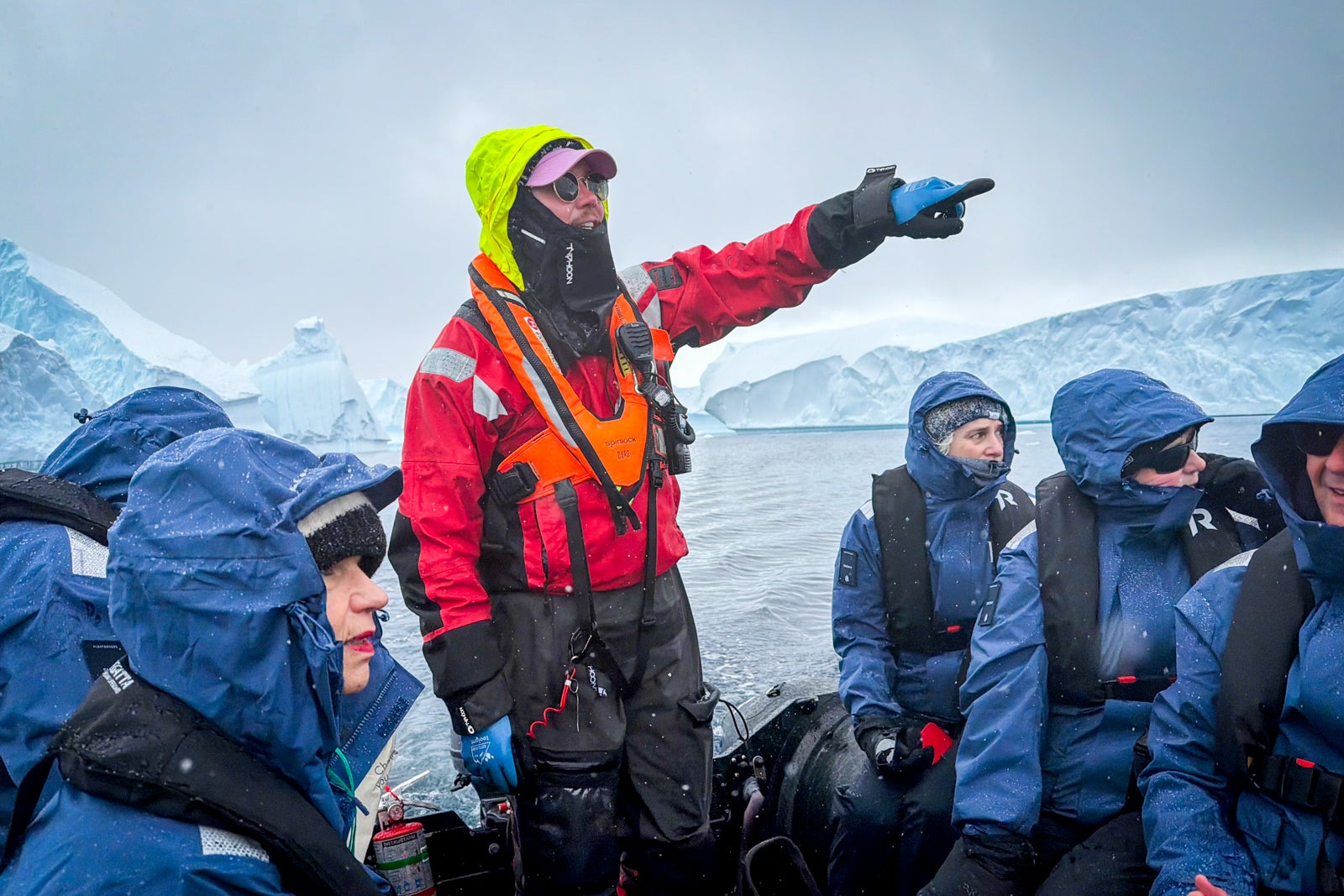
The ship's large size — at 20,889 gross tons, it's two to three times larger than many expedition vessels — allows it to carry 17 Zodiacs for landings and waterborne adventures. But where it truly stands out is in its massive array of kayaking, camping and snowshoeing gear, which includes 20 hard-shell sea kayaks, 30 inflatable kayaks for calmer waters, 15 two-person tents, 30 one-person bivvy bag camping systems and more than 100 pairs of snowshoes.
Thanks to all of this, it's able to offer a wider range of adventures than many expedition vessels.
2 types of kayaking
The options for adventure on Roald Amundsen include two different kinds of kayaking outings — extended guided trips in the sea kayaks and (new this year) shorter and less intensive self-guided trips in the inflatable kayaks. Both come at an extra charge of 199 euros and 129 euros person (about $235 and $152), respectively.
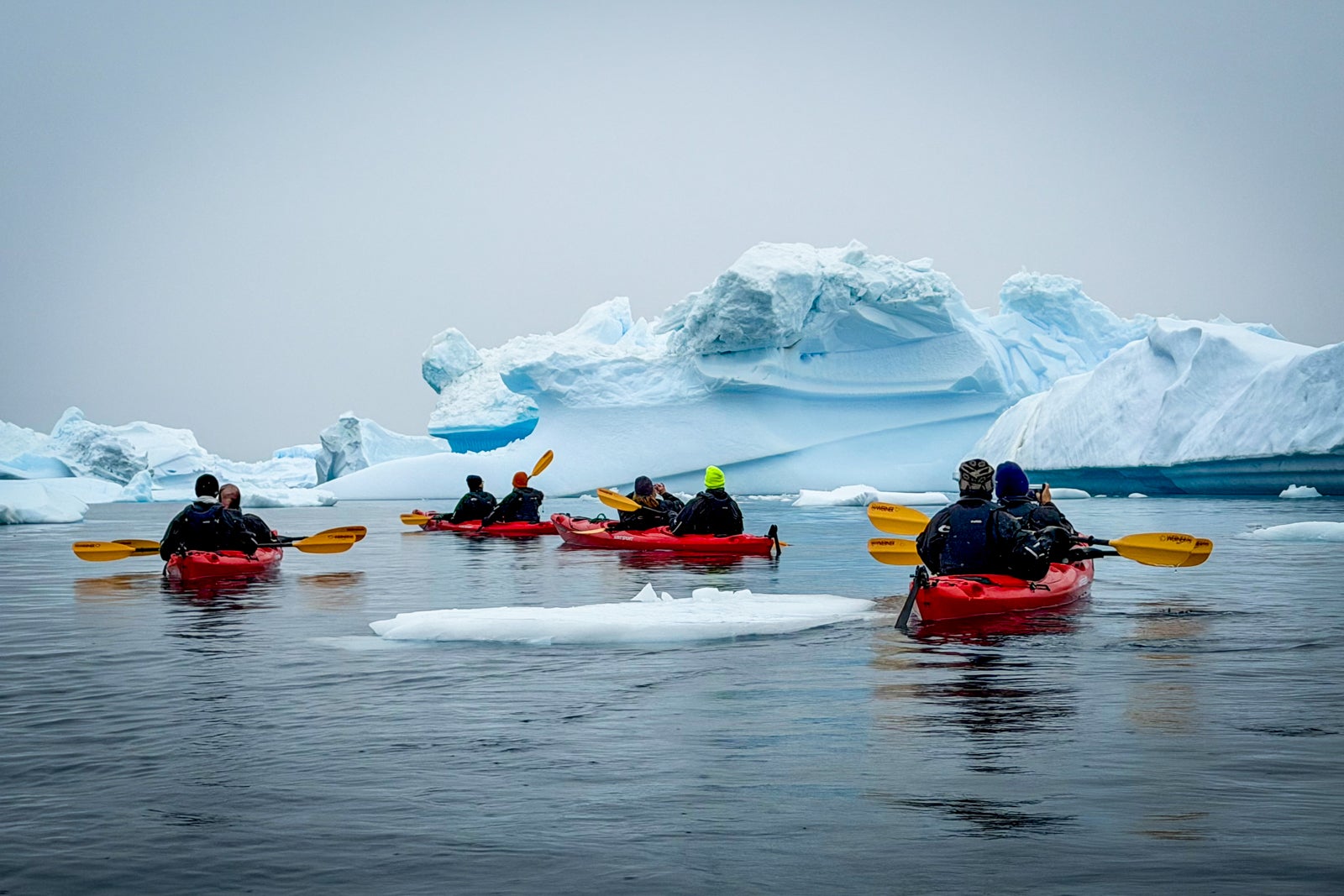
As I saw during one of the guided sea kayak outings, at the Adelie penguin-covered Yalour Islands, it's a way to see Antarctica's splendor from a different angle. Paddling through narrow channels between the islands, my companion and I reveled in our from-the-waterline view of penguins sitting on chicks above us — and occasionally waddling down our way for a swim.
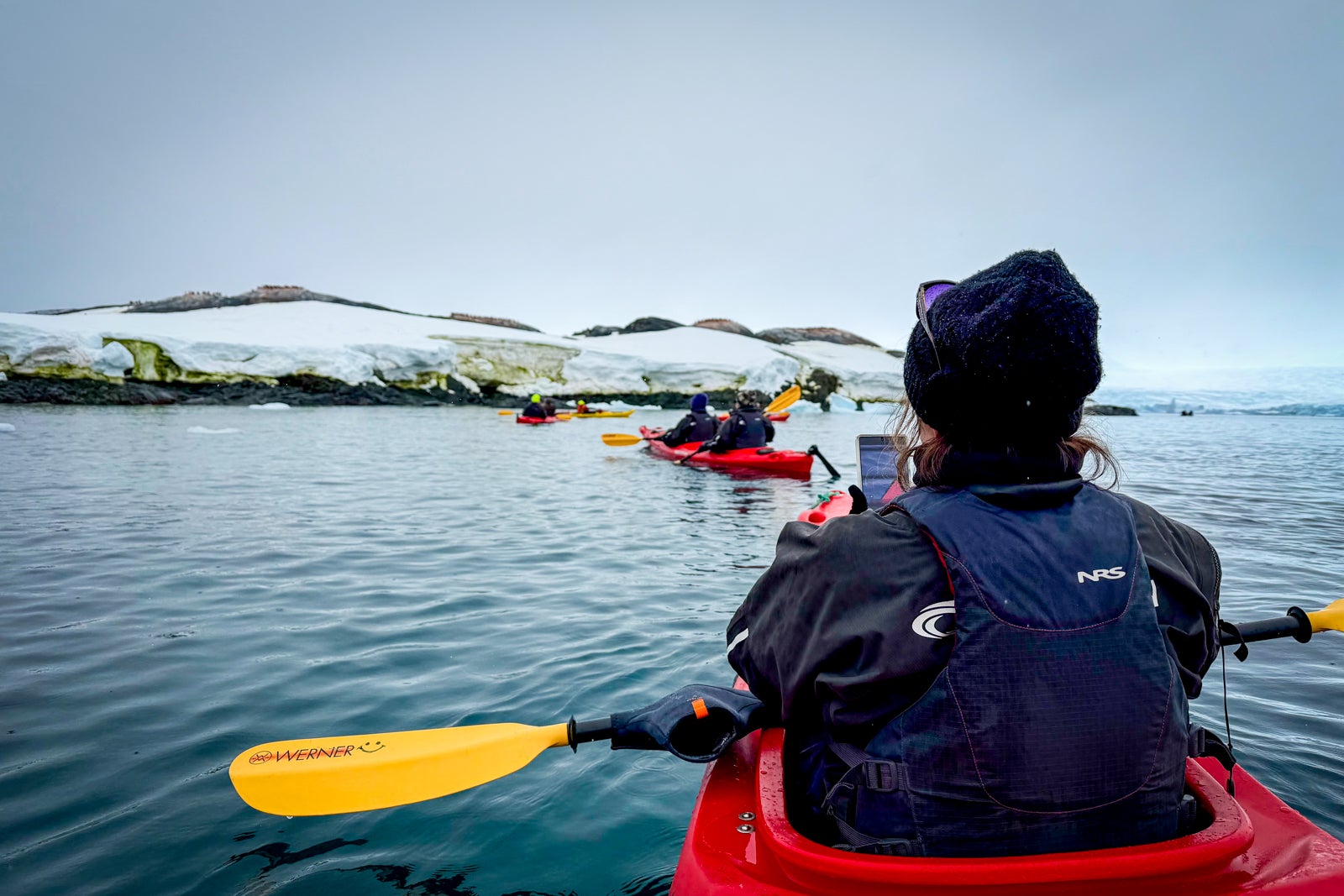
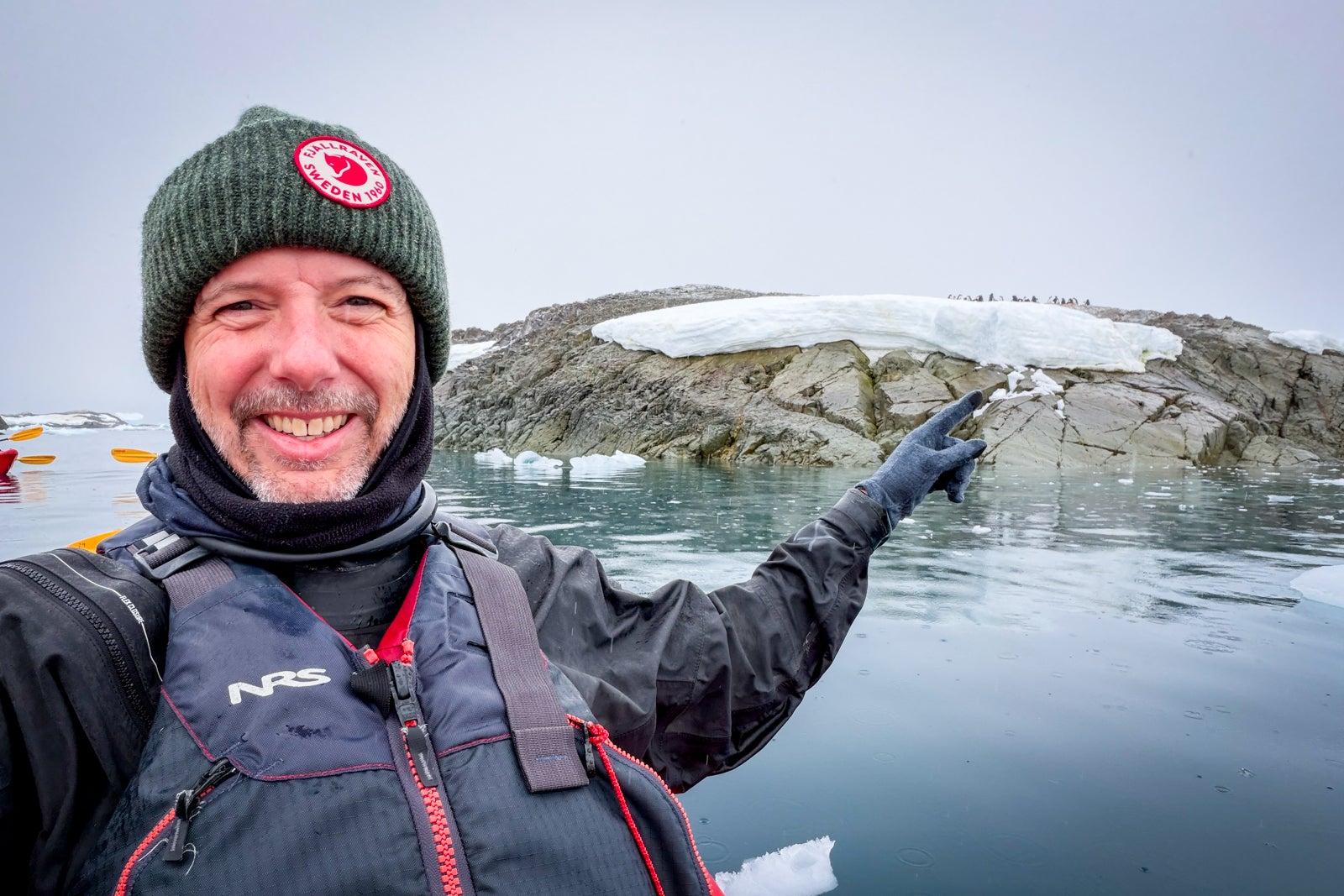
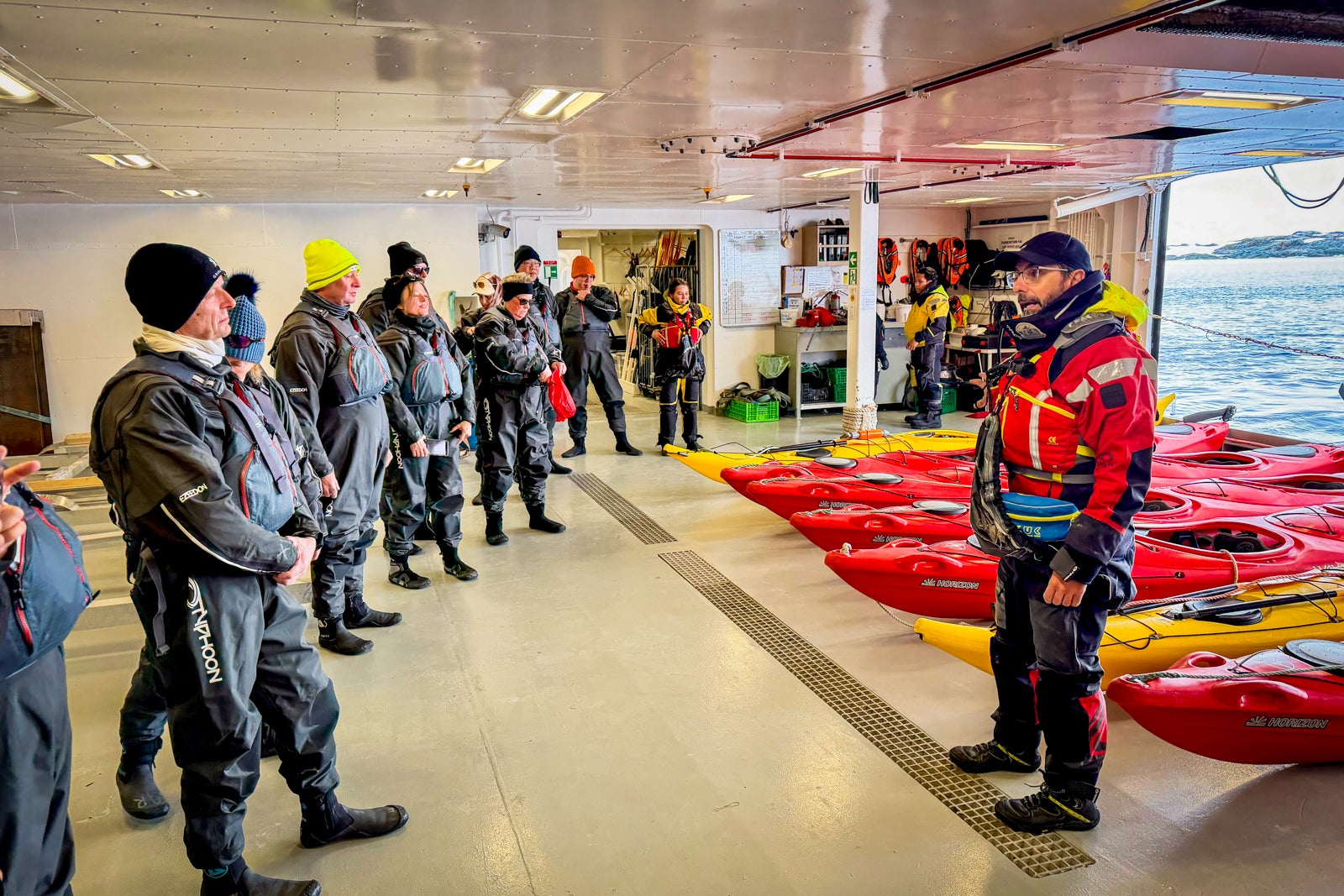
At times, we crossed in front of huge icebergs — keeping a safe distance, as we had been trained — that made the scene even more spectacular. With no noise other than the sound of our slow-moving paddles, we could hear the waves lapping on the ice and the braying of the Adelies in the distance.
The gear the ship carries also allows for two types of camping outings: two-person tent camping of the sort I did early in the trip and (new this year) single-person camping in the bivvy bags. Both come with an extra charge of 429 euros and 350 euros ($506 and $413), respectively.
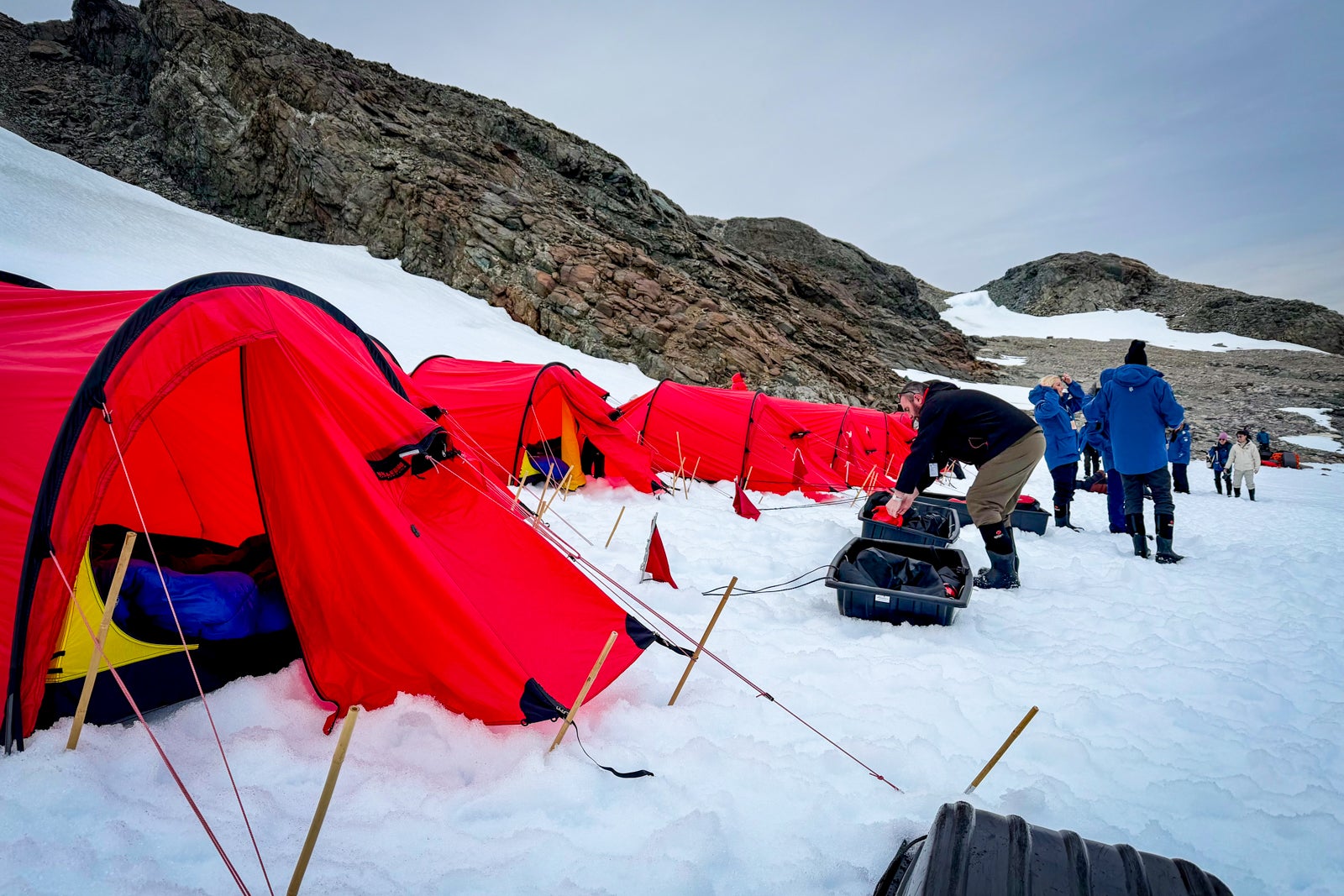
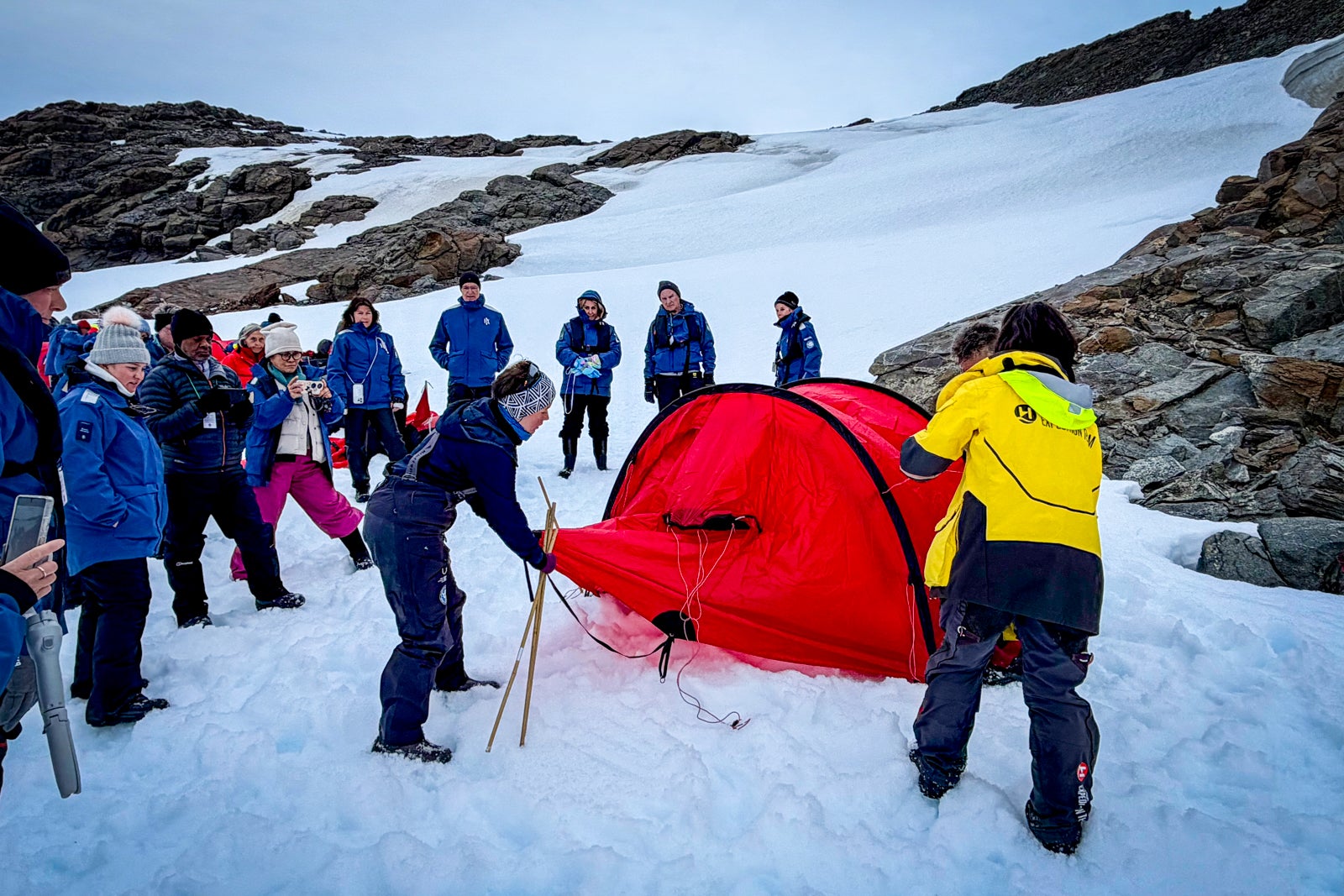
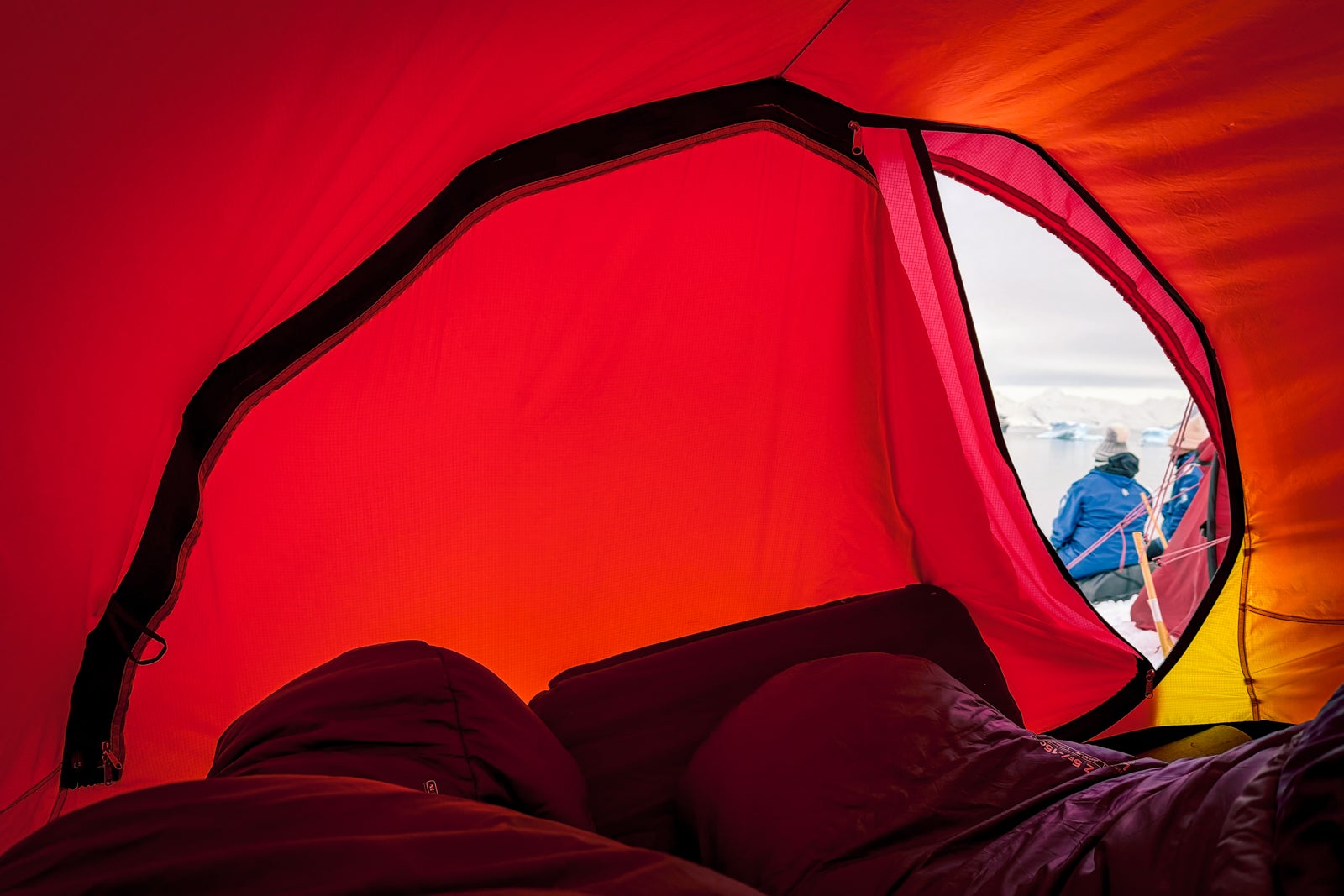
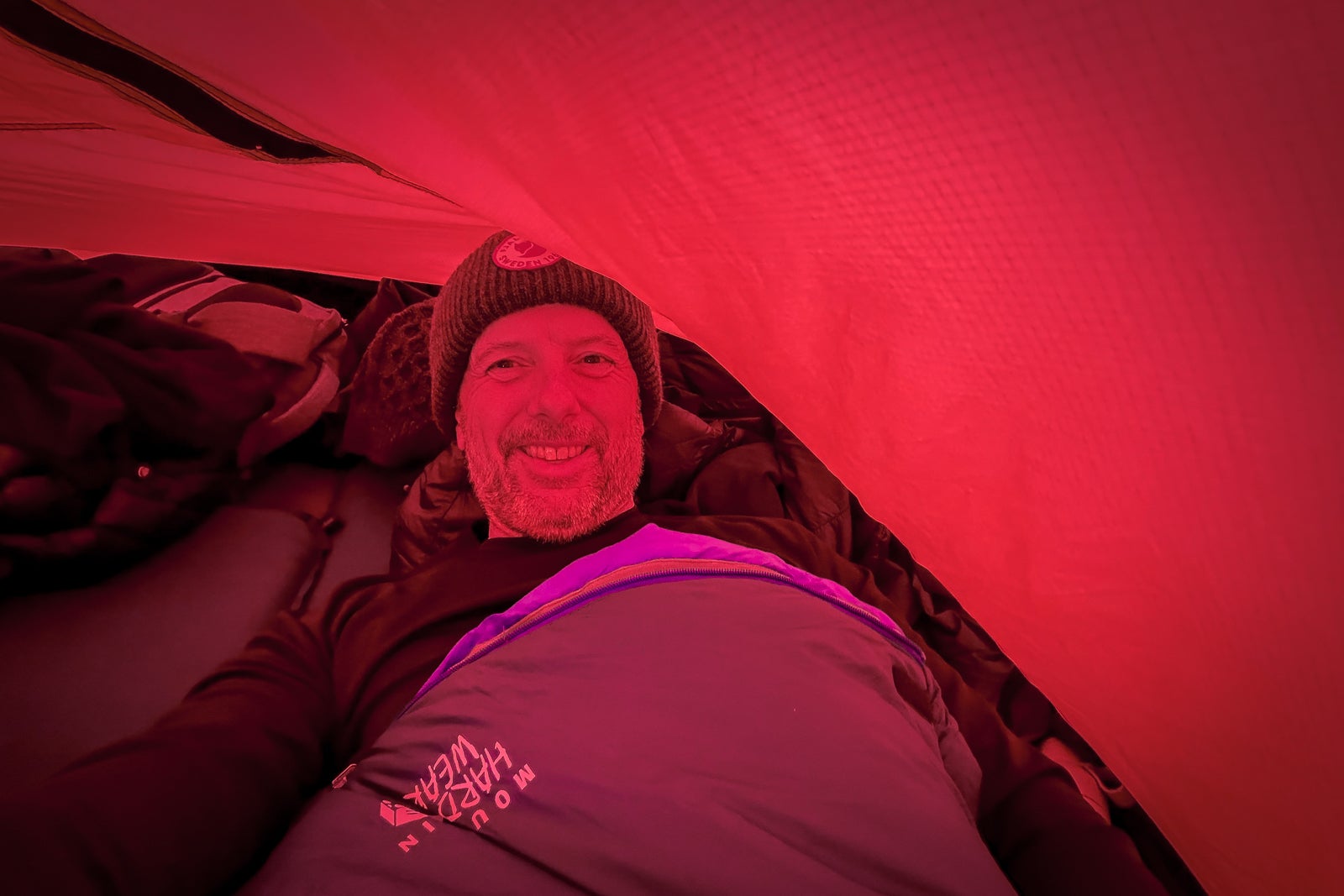
In both cases, as I saw firsthand, these are true hands-on camping experiences. Passengers drag their own (ship-provided) gear a short distance across the snow to the camping site in sleds and set up the tents themselves. The next morning, they break them down and bring them back, too.
Related: I just camped on the ice in Antarctica — here's how you can, too
Like the camping outings, the snowshoeing outings allow for a more intimate and in-depth experience on the land of Antarctica.
Joining a small group of passengers and guides on the one snowshoe excursion offered during our trip, on a snowy corner of Wiencke Island, I clomped through the snow in my snowshoes nearly half a mile to a gentoo penguin colony at what is known as Damoy Point, getting to glimpse the penguins and their chicks up close in a more remote setting than is typical during standard landings.
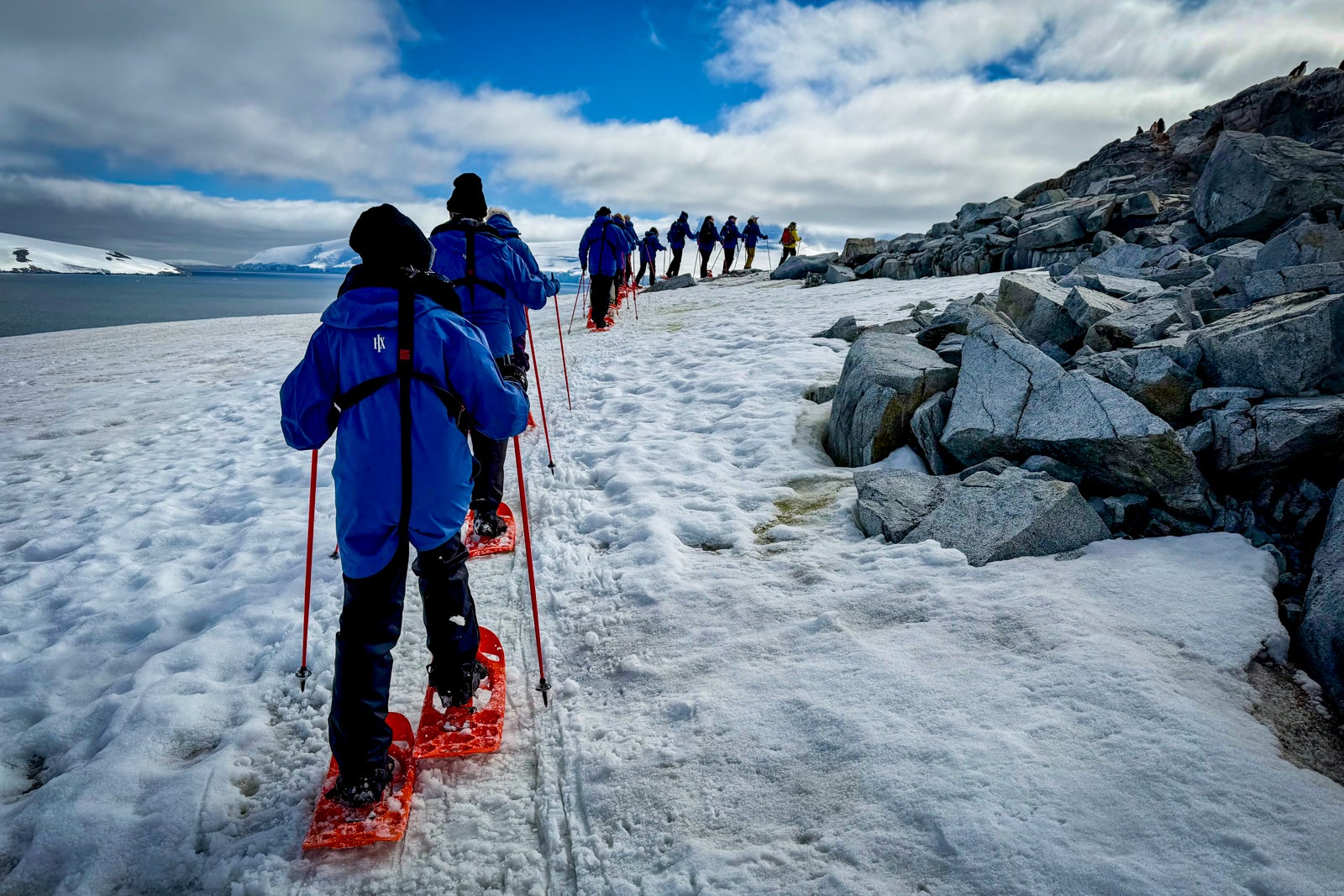
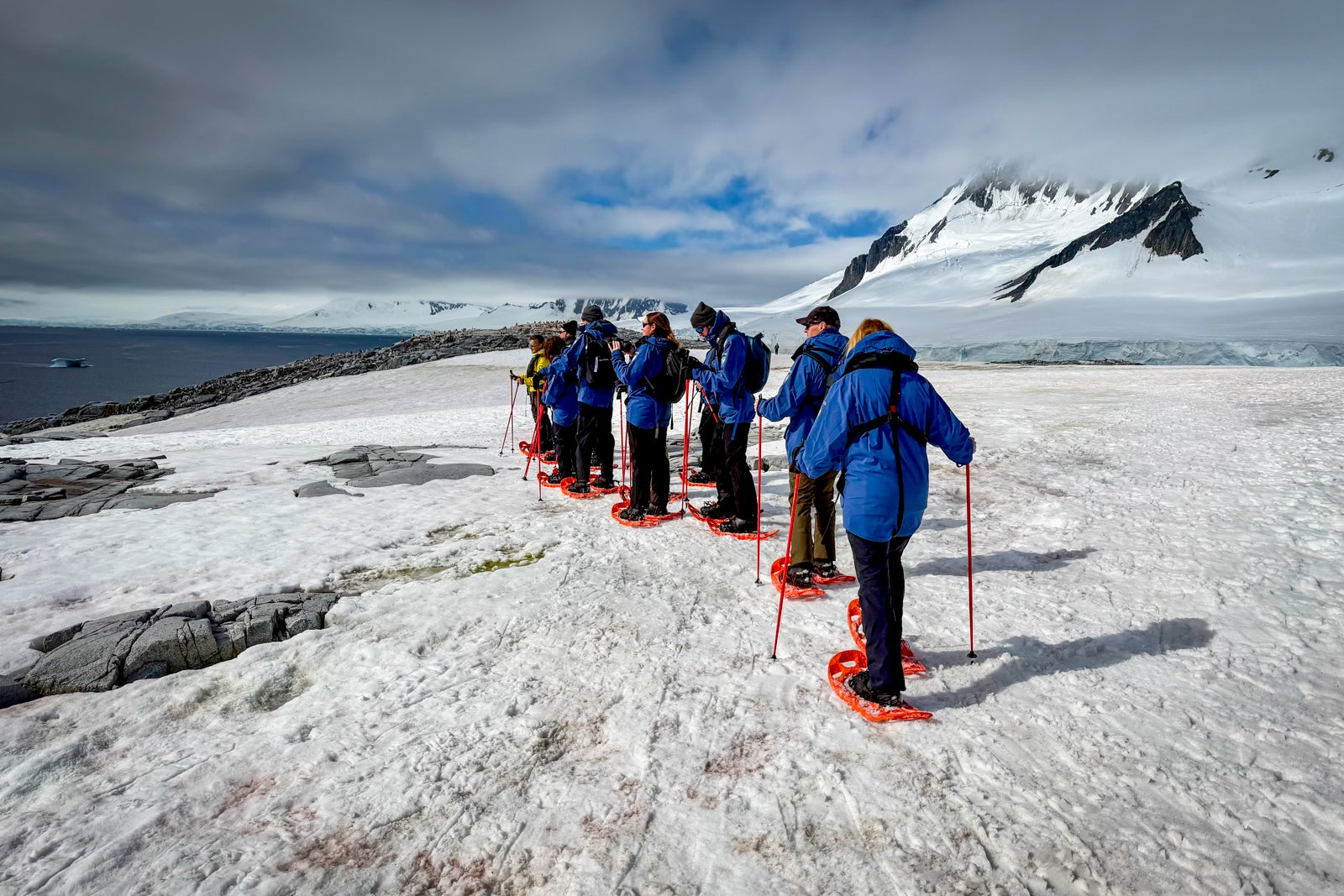
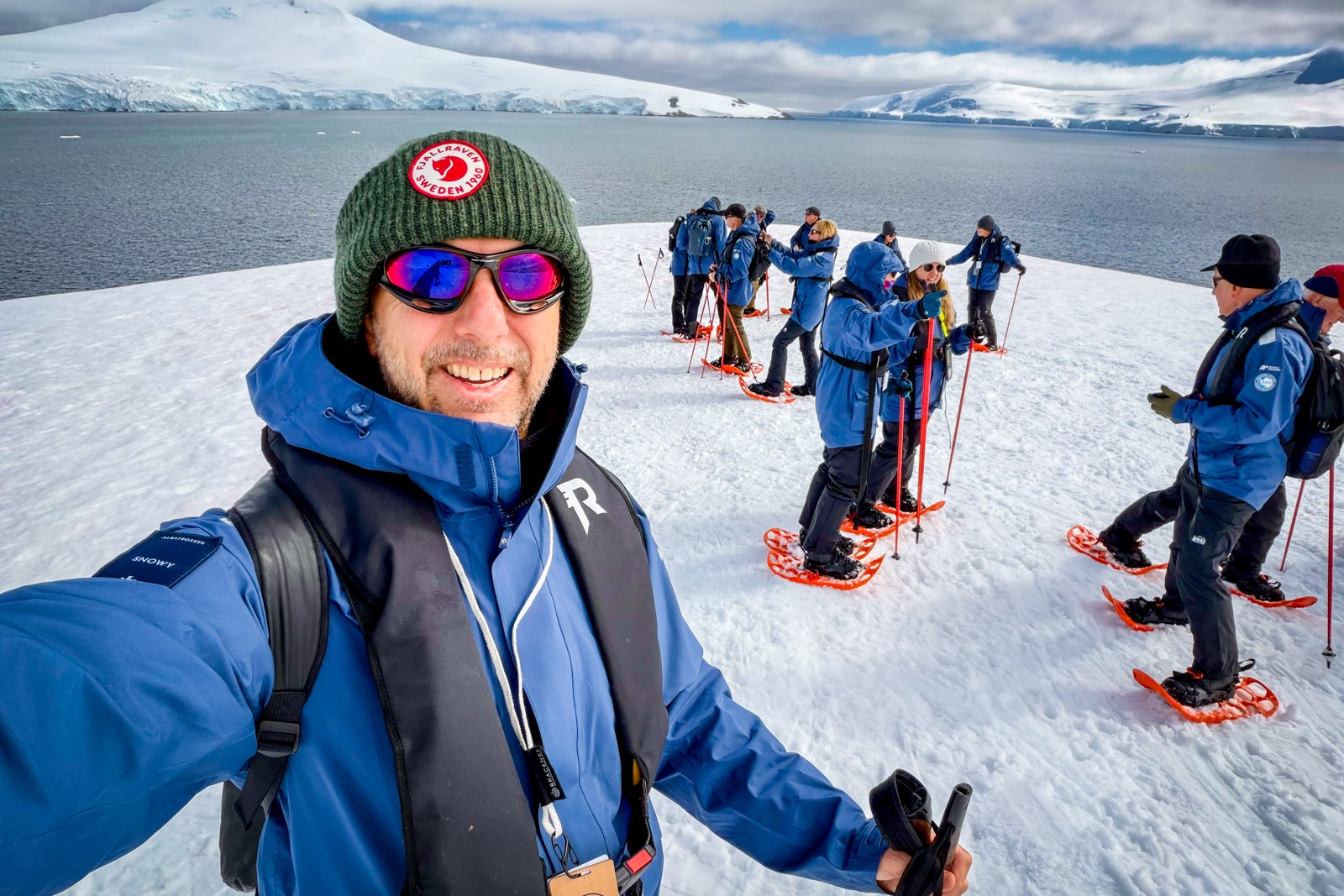
Our group of snowshoers — one of several out that day — then followed the coast past more penguins back to our landing spot. In all, we snowshoed about a mile and a half.
The snowshoe outings also come with an extra charge of 79 euros ($93) per person.
Comfort in a frozen land
While it's built for outdoor adventure, Roald Amundsen isn't a ship where you'll be roughing it.
The vessel has three restaurants serving quality cuisine (one reserved primarily for suite guests), a spacious lounge and bar where all but top-shelf drinks are included in the fare, and a solid array of wellness venues, including a heated outdoor infinity pool and a small spa offering a range of pampering treatments.
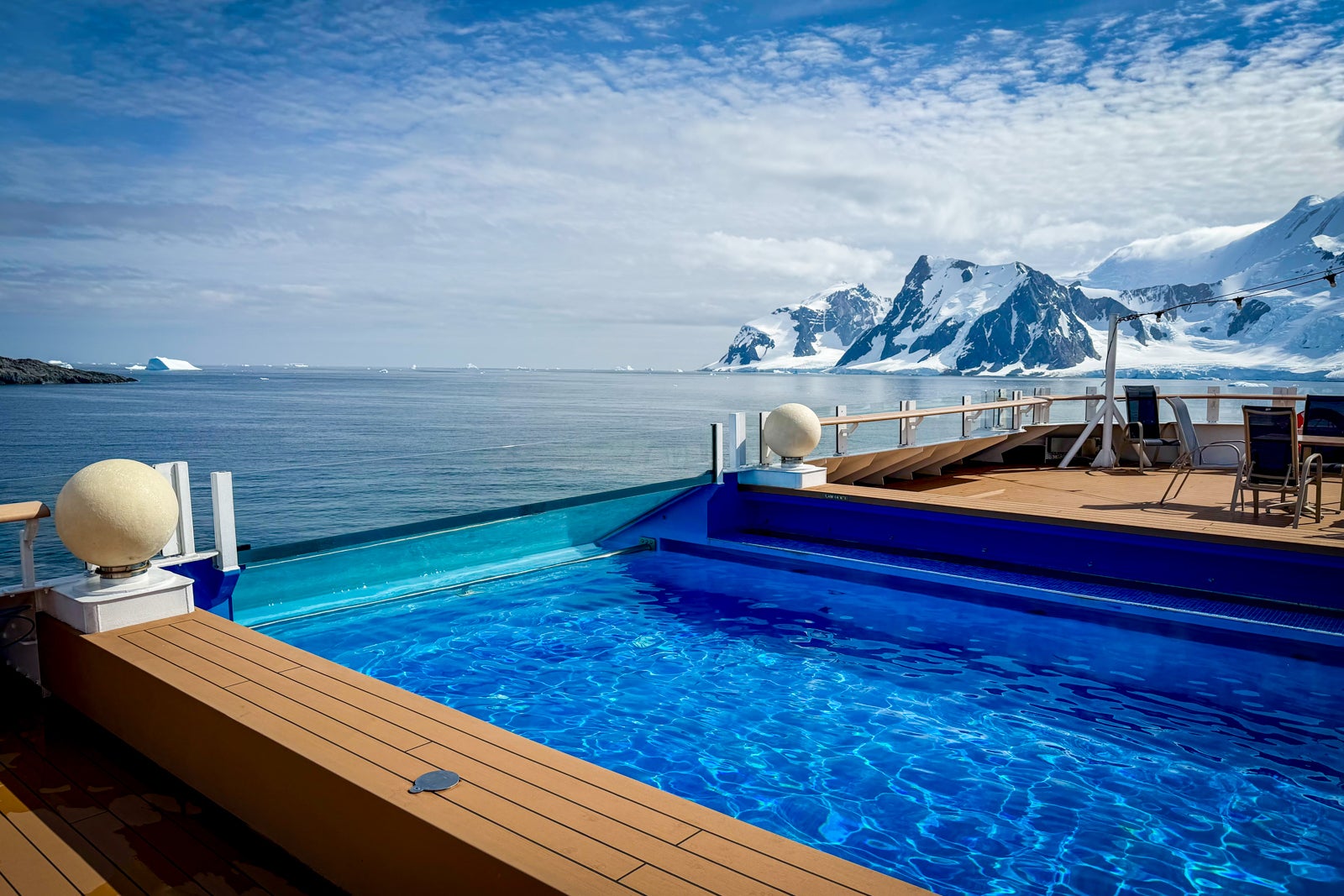
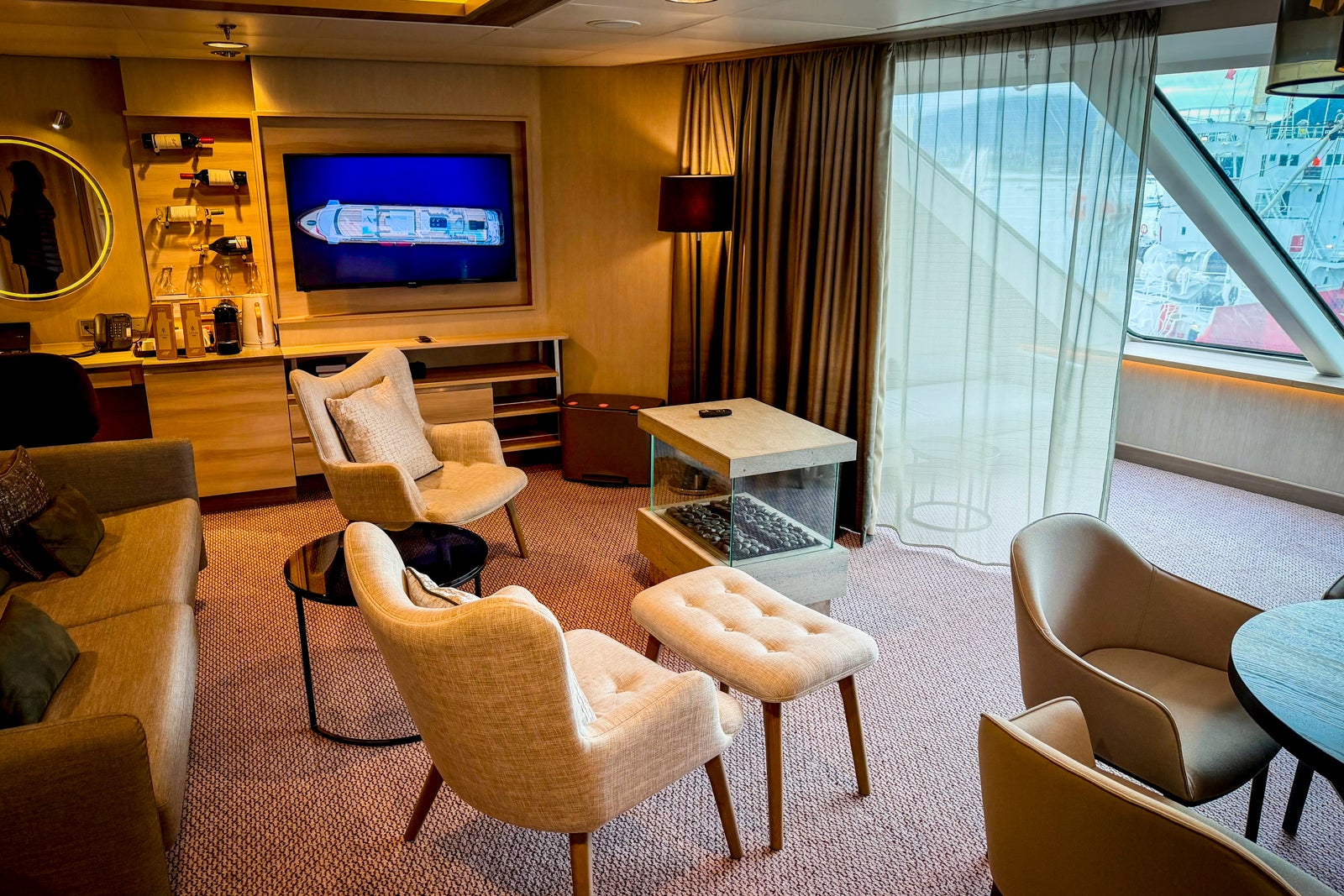
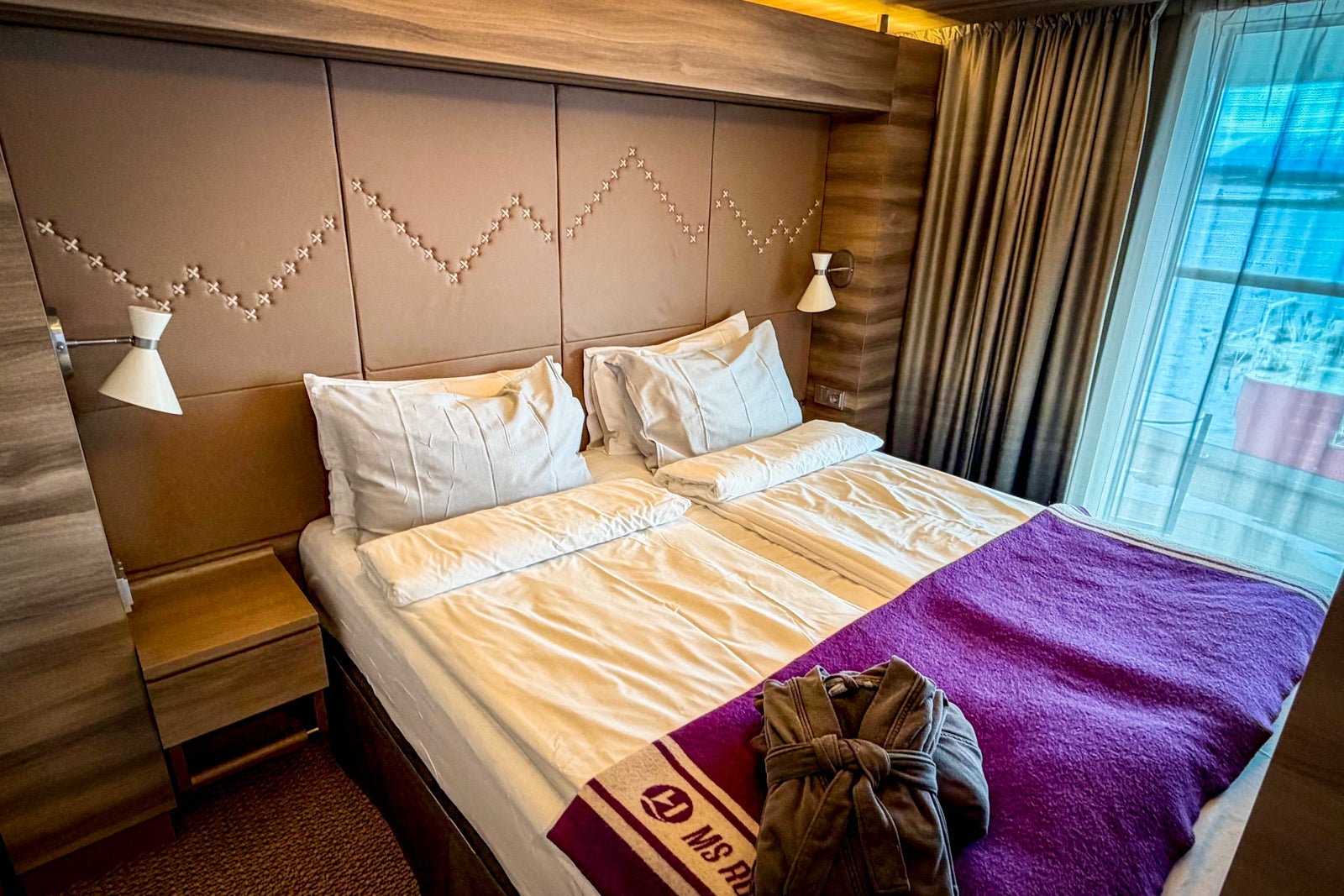
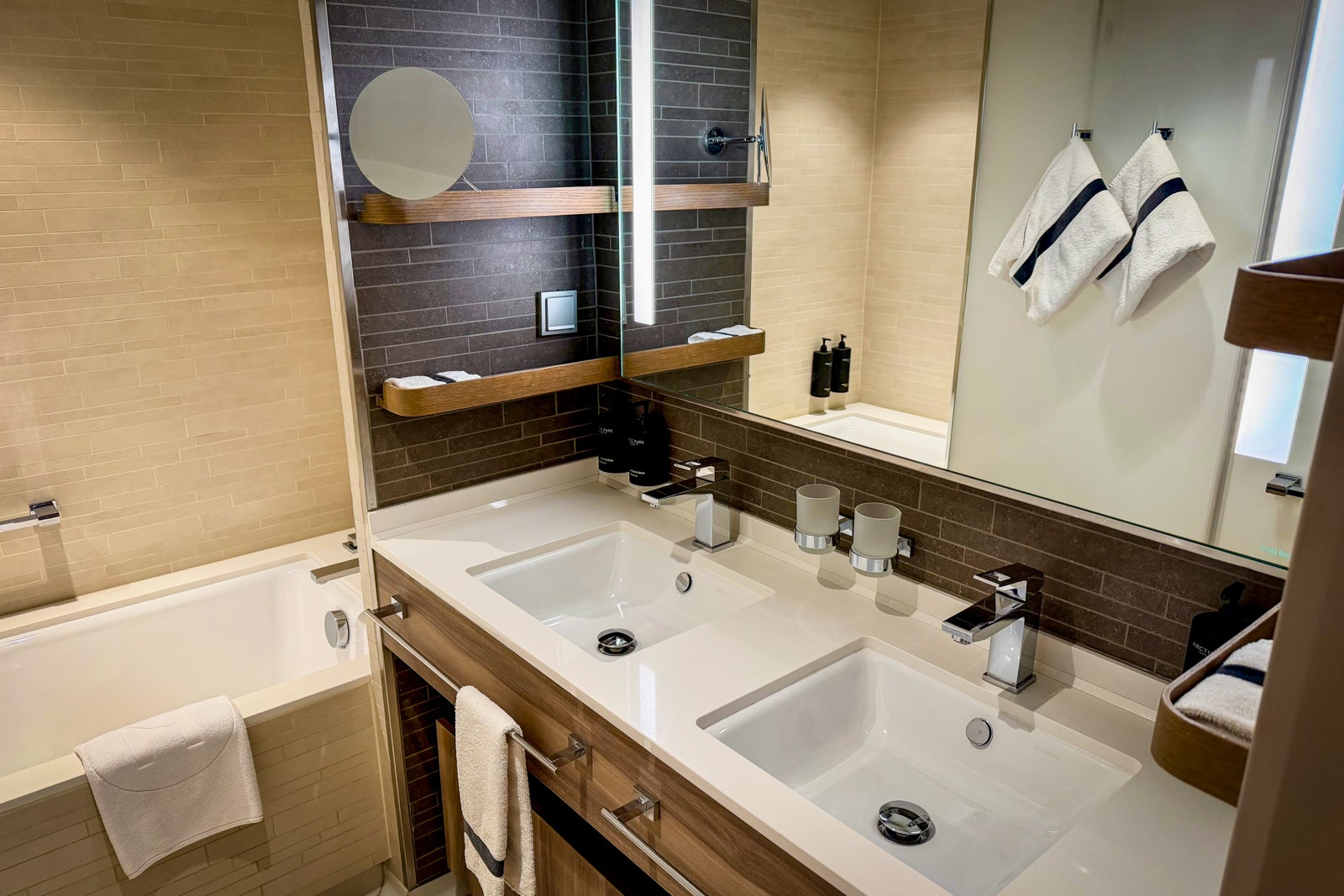
Cabins on the ship are modern, spacious and comfortable, with a stylish Scandinavian-influenced design and luxury touches such as heated floors in bathrooms. Half of all cabins have balconies, which isn't always the case with expedition ships.
There also are several large suites on board of the sort you find on the most luxurious expedition vessels.
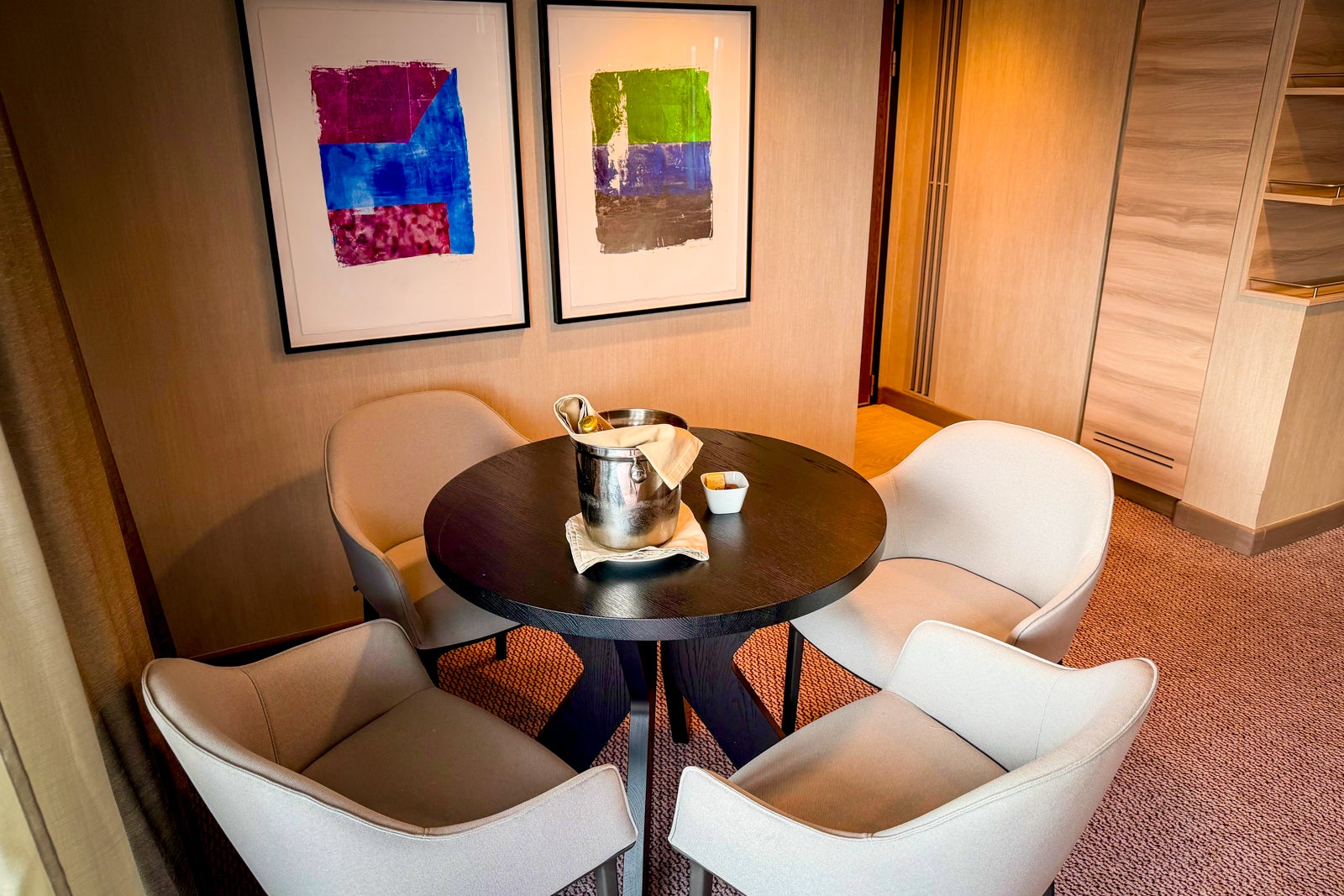
That said, Roald Amundsen isn't a luxury ship. With 167 crew members to serve as many as 490 passengers (the number is capped at 450 on Antarctica sailings), its crew-to-passenger ratio — a metric often used as shorthand to gauge the luxury level of a vessel — falls firmly in the midmarket range.
Unlike several other new expedition ships unveiled recently by Seabourn, Ponant Explorations, Scenic Cruises and Viking — all brands that play in the luxury travel space — it does not offer high-end touches such as 24-hour room service (except for passengers staying in a few top suites). Its main restaurant is a casual buffet-style venue for breakfast, lunch and some dinners, and it can be crowded at times — something generally not found on higher-end vessels.
Related: The ultimate guide to expedition cruise ships and itineraries
The ship also carries more passengers than is typical for expedition ships sailing to Antarctica, resulting in a somewhat less intimate experience. Most expedition ships sailing to Antarctica carry around 200 passengers — some a bit more, some a bit less.
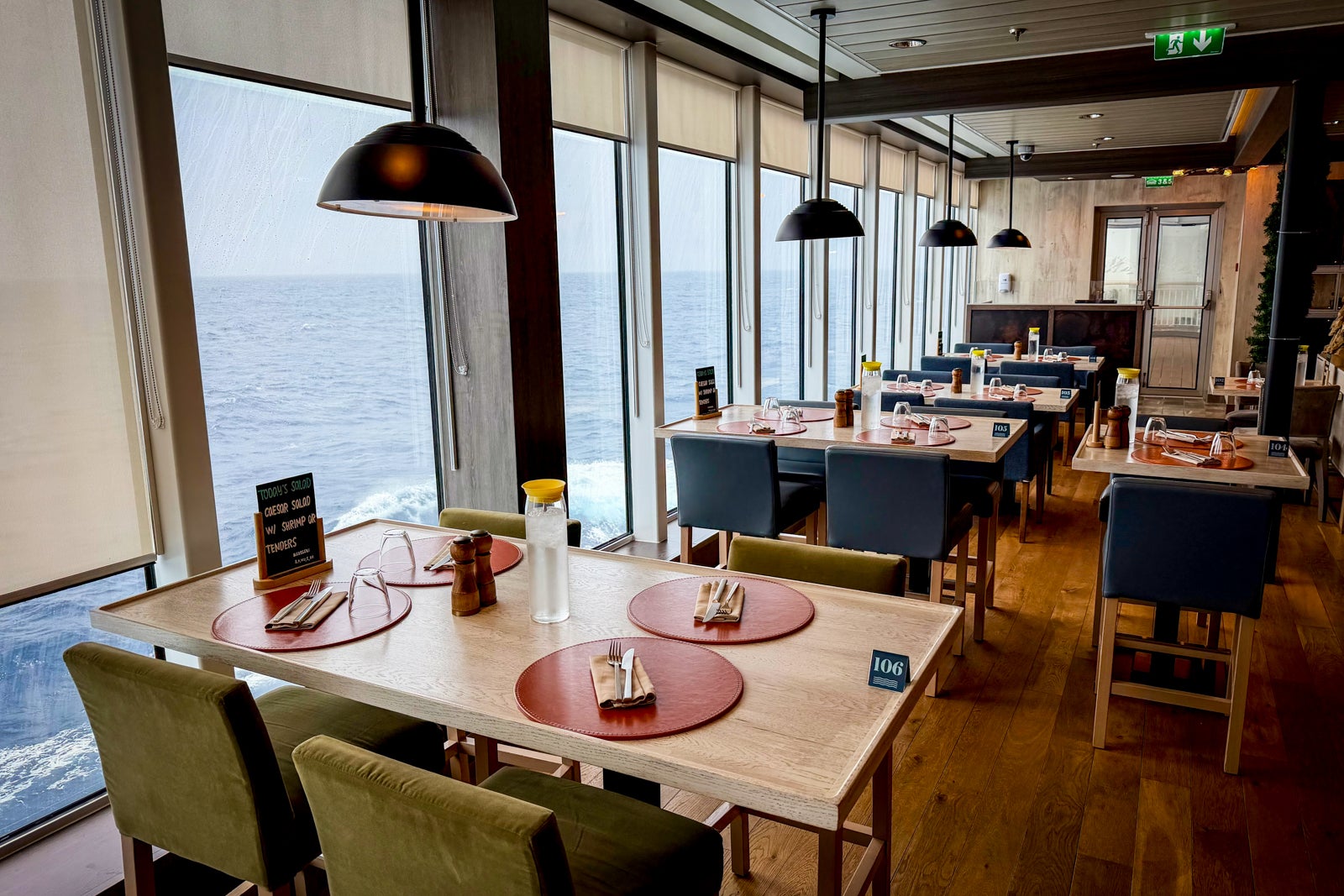
On the flipside, Roald Amundsen is considerably more affordable than these other vessels.
While all Antarctica trips are pricey, 11-night Antarctica voyages on Roald Amundsen for early next year start at $9,721 per person, including internal flights in Argentina — about $884 per person, per day. A similar 12-night trip on one of Viking's two relatively new expedition ships for the same period, by contrast, starts at $15,995 per person — about 50% more on a per-day basis. The pricing differentials are similar with sailings offered by Seabourn, Ponant and Scenic.
The above pricing, moreover, is for entry-level cabins. At the higher end of cabin options on each of the vessels — the largest suites — fares can be roughly twice as much for these other new ships.
In short, among the newer expedition vessels traveling to Antarctica, Roald Amundsen — along with a nearly identical sister vessel, Fridtjof Nansen, that debuted in 2021 — is carving out a niche as one of the leaders in value.
A focus on sustainability
Roald Amundsen and its owner, HX Expeditions, have also carved out a niche when it comes to sustainability. When it debuted in 2019, Roald Amundsen was the first and only cruise vessel in the world equipped with large batteries and electric motors that allow it to run on hybrid-electric power, and it remains one of just a handful of such vessels.
The technology results in up to 20% lower fuel consumption and carbon emissions than similarly sized ships during normal operations, according to HX Expeditions. In theory, it also allows the vessel to run entirely emission-free and almost silently on battery power alone for short periods of time in sensitive areas — though this isn't something the ship often does. During my sailing, the ship never ran on battery power alone.
And science, too
Equipping Roald Amundsen with hybrid-electric engines isn't the only move HX Expeditions has made in the name of sustainability. Even before the debut of the ship, the company had eliminated the use of heavy fuel oil and single-use plastics across its fleet, becoming the first cruise line in the world to do so.
But it's not just a focus on such sustainability measures that has set the brand apart in the world of polar-region expedition cruising. HX Expeditions also has made waves with its contributions to scientific research.
While many expedition cruise companies operating in polar regions support scientific efforts by welcoming scientists on board to conduct research during trips, HX Expeditions has what it bills as the largest such program. Nearly 90 scientists involved in more than 30 research projects sailed on its ships over the past year, working in cabins donated by the line.
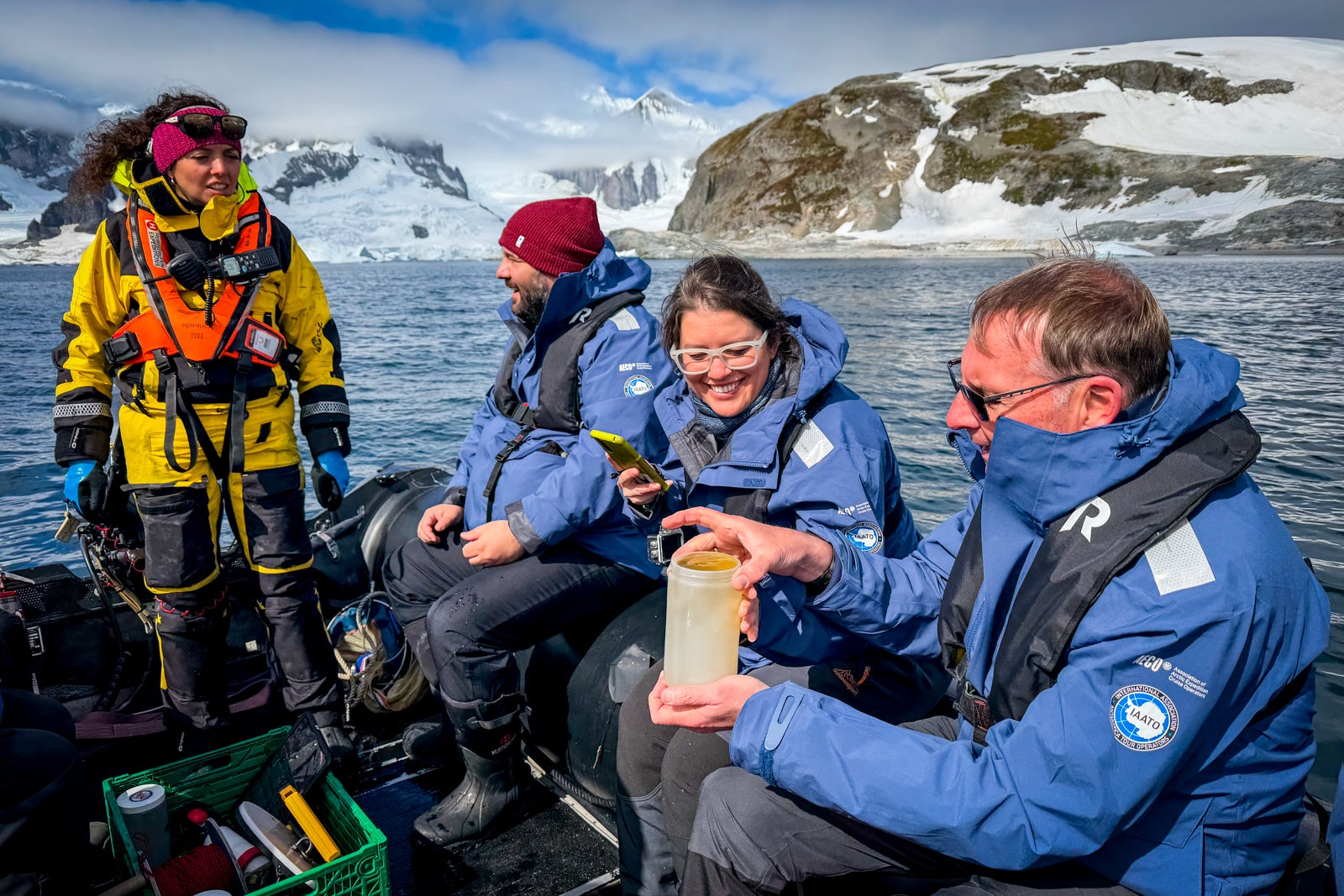
Among the scientists on board my sailing was a biologist studying the health status, foraging behavior and colony size of penguins along the Antarctic Peninsula.
The work includes sampling the water at various coastal sites — something passengers on board have the chance to take part in through "citizen science" outings.
Like many passengers on board, I signed up to contribute to this citizen science, joining eight of my fellow passengers and an expedition guide for a Zodiac ride to collect water samples.
Heading out for about an hour during a stop at Cuverville Island, along the Antarctic Peninsula, we dragged a fine net behind us for several minutes to capture plankton in the water for later testing.
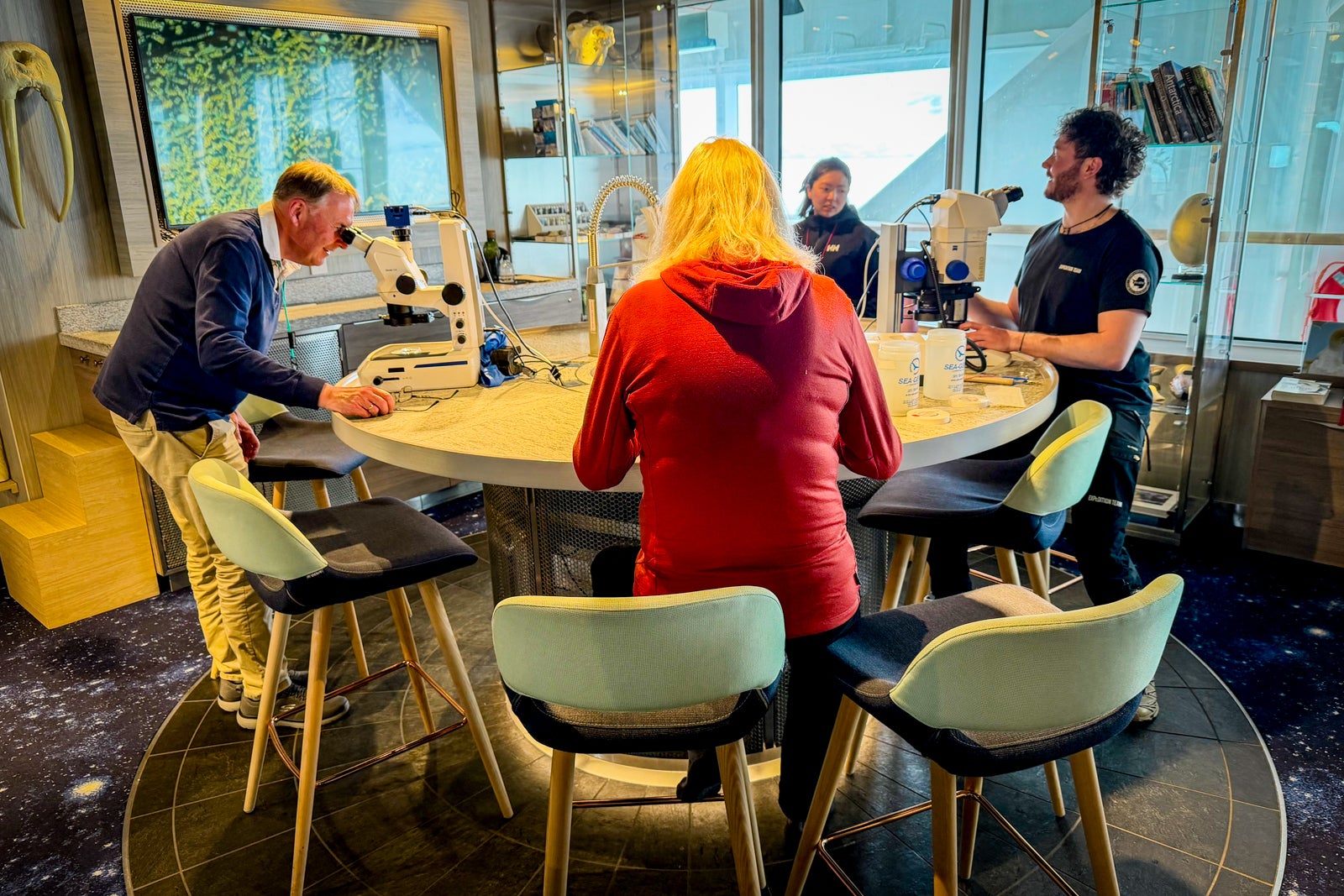
We also cut the engines for a time to lower an oblong device that measured the water's temperature, salinity and other attributes at various depths, and we conducted another experiment to gauge water turbidity.
Whatever scientific value the testing had, the outing offered yet another view of the beauty of Antarctica. With the engines cut, our Zodiac drifted quietly between icebergs in the bay, allowing us to hear penguins splashing in the water around us and glaciers calving in the distance.
After returning to the ship, we had the chance to examine the plankton we had collected through microscopes in the vessel's science center — a glimpse of a slice of Antarctic wildlife that most visitors never see.
A wide mix of passengers
One thing to note about Roald Amundsen sailings in Antarctica that is different from sailings in the region operated by some other brands is that they are multilingual. In addition to English speakers, the ship draws a significant number of passengers from German-speaking countries as well as from China. On many sailings, announcements are delivered in three languages — English, German and Chinese — which can lead to them being longer than usual.
The wide mix of passengers gives the ship an international flair that may appeal to many travelers. On my sailing, about a third of passengers — 108 out of 303 — were Americans, and the rest represented a wide mix of nationalities — 16 in all.
Bottom line
HX Expeditions is a great choice for travelers looking for a relatively affordable way to visit Antarctica, particularly for those looking to prioritize sustainability a for a little adventure in the form of camping, kayaking and snowshoeing along the way.
Planning a cruise? Start with these stories:
- A beginners guide to picking a cruise line
- A quick guide to the most popular cruise lines
- The 5 most desirable cabin locations on any cruise ship
- 21 tips and tricks that will make your cruise go smoothly
- 15 ways that cruising newbies waste money on their first cruise
- The ultimate guide to choosing a cruise ship cabin